Is Dog Socialization a Good Thing?
Absolutely.
Is it that simple? Are we done?
As with most worthy endeavors, it is a bit more complex than that.
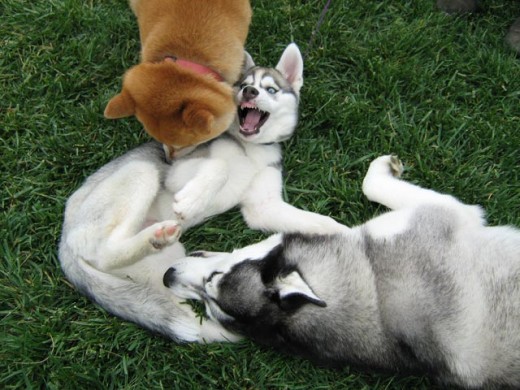
What is Dog Socialization?

As I understand it socializing a dog means introducing him to a variety of objects, people, animals, and environments so that he becomes comfortable in a wide range of situations.
This is a good thing because when confronted with something new and possibly scary, a well-socialized dog is confident enough to handle it without resorting to aggression. Instead, he may just be copacetic about the whole thing, look to us for direction, or try to diffuse the situation through calming (body) signals.
When we talk about dog socialization, most people only think about dog-to-dog socialization. Dog to dog interactions are certainly a part of dog socialization, however, socialization encompasses all things new including objects, noises, people, animals, and environments.
Note that socializing our dog does not mean that we completely remove all possibility of aggression. Socialization, however, will help raise our dog’s aggression threshold so that he is capable of using other behaviors to deal with new and possibly threatening encounters.

Dog Socialization Is Frequently Misunderstood
Today, dog socialization has become one of the popular metrics for measuring a good dog owner.
- I take my dog everywhere and let him meet each and every dog that we see.
- Since my dog has been to more places and has met more people than your dog, I am a better dog parent.
Dog owners gather together and compare notes on the number of places their dog has visited, the number of people met, and the number of dogs played with.
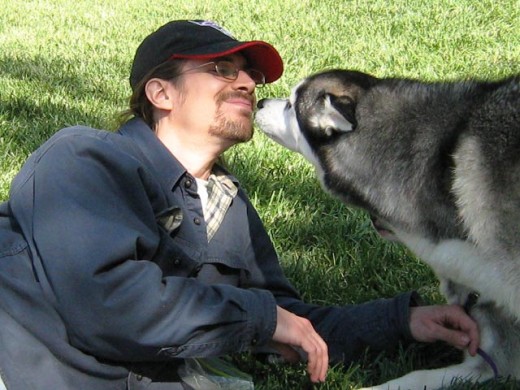
However, what we sometimes miss is that dog socialization is not just about throwing our dog into as many new situations as possible. The key part of dog socialization is to help our dog become comfortable in those new situations.
If we keep throwing new things at our dog and he keeps experiencing a negative outcome, we are not really socializing him. Instead, we are teaching him to fear new things.
This is the opposite of what we hope to attain with dog socialization.
Dog Socialization = Dog Parks?
The other day I was walking my Sibe puppy, and we stopped to talk to one of our neighbors. The topic naturally turned to puppies and socialization.
My neighbor tells me that her now adult dog is very dominant towards other dogs. She says,
“We socialized him by taking him to the dog park when he was young, so I do not understand why he is so dominant now.”
Then she goes on to explain that when the dog was a puppy, he was alpha rolled by other dogs at the park.

Dog-to-dog socialization does not mean leaving our dog with a group of other dogs and hoping for the best. Enclosed dog parks are usually poor places to socialize a dog because –
- The environment is often chaotic and under-supervised. Dogs get over-excited, and this may lead to dog-to-dog aggression.
- There are older dogs there who may not want to interact with other dogs.
- There may be dogs who only want to play chase the ball with their owners. If another dog steals their ball, they may get aggressive.
- Some owners have a “let the dogs work it out for themselves” mentality. This means they spend all their time chatting and do not supervise or pick up dog poop.
- Some owners bring small children who run around and shout at the dogs. This can trigger a dog’s prey drive, and cause the dog to chase the child.
- Some owners may try to correct other people’s dogs and get hurt as a result. This usually means bad things for the dog.

Unless a dog is already well socialized, calm, and has great recall, an enclosed dog park is often a risky proposition.
I used to take my Shiba Inu to the dog park, and there was this Australian Cattle Dog there together with his fireman companion. Like any other dog, he wasn’t perfect, but his recall was awesome. Every time things got too excited, or it looked like something was about to start, the fireman would call his dog, and the dog would run to him. He would put the dog’s collar on, and wait until things got resolved. Sometimes, they would just leave.
It was very impressive!
A dog like that I would have no problems taking to an enclosed dog park. On the other hand, in-training dogs are more likely to pick up bad habits at the park than to actually be “socialized“.
More structured alternatives for dog-to-dog socialization include dog training classes, well supervised puppy play groups, supervised one-on-one play sessions, fun hiking trips in large unenclosed parks, dog daycare, and group dog walking.

Dog Socialization – Some Things to Consider
1. Go at a pace that our dog is comfortable with.
Dog socialization is not some competition. There are no medals, prizes, or monetary rewards for the dog that visits the most locations or meets the most people.
The goal of dog socialization is to enhance our dog’s life, and our own life by helping him become a more confident and less stressed out dog. This allows us to integrate our dog more fully into our lives, and have him with us wherever we go.
As such it is important to set our dog up for success, and only introduce him to new things at a pace that he is comfortable with, and can handle. Of course, being over-protective can also result in a dog being under-socialized. Thus, there must be balance between the two.
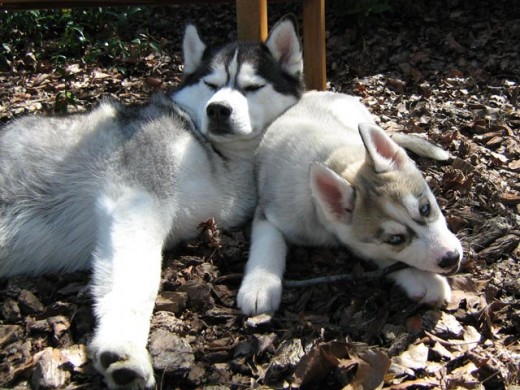
2. Careful planning and management.
Another important part of dog socialization success is to have a plan. When I was socializing my Shiba Inu puppy, I always try to plan out our social training exercises in great detail. Plans help me cope with stressful situations because I know what to do, and I am ready to take charge.
I also try to set up training exercises in areas where I have more control over, and with dogs that are pre-screened. For example, I would bring my Shiba Inu to a nearby SPCA to have one-on-one socialization sessions with friendly SPCA dogs. Sessions were supervised by us, and an SPCA trainer.
We would only let Shiba play with friendly, non-dominant dogs. Sometimes, we would also practice with less social dogs, but in this case, we train both dogs to stay calm and ignore each other.
There is great value in neutral dog-to-dog encounters.
While some dogs may be social butterflies, others prefer to carefully choose their friends and playmates. Therefore, I do not believe in forcing my dogs to be friendly and meet, greet, or sing kumbaya with every dog that they see.
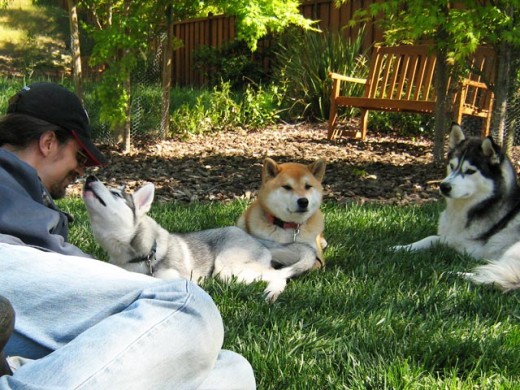
3. Always have an escape strategy.

I always try to have an escape strategy. Sometimes, things just do not work out no matter how many precautions we take. Therefore, I plan for what to do when a dog socialization session turns bad.
Usually, when things go bad, I focus on removing my dog from the situation as quickly as possible, and taking him home. I do not stick around to quarrel with the other people, I try my hardest not to shout, and I try my hardest not to get stressed or fearful.
When my dog gets so excited that he goes rear-brained, he starts to only act on instinct and is no longer able to learn and reason. He stays in this state for some time afterward, even after removing him from the problem stimulus. Therefore going home or going to a quiet place to let him calm down always seems to work best.
4. Listen to our dog.
Dogs may not communicate to us in the same way as people, but they *do* try to communicate with us. An important part to dog socialization is to listen to what our dog is saying.
This is mostly done by looking at our dog’s body language. A dog’s body language may change quickly, and may be difficult to catch. In the beginning it was difficult to tell what my dog was saying, but it got easier as I spent more time carefully observing him.
Also, some dogs are more “vocal” about their needs than others. My Siberian Husky Shania will try to endure things in silence and on her own, but my Shiba will usually get in my face, and let me know that he is unhappy. However, silence itself, is a type of communication.

5. Be flexible
What worked best for my Shiba Inu in terms of dog-to-dog socialization, are more structured environments such as supervised one-on-one play sessions.
During neighborhood walks, he meets friendly, calm dogs that are under good control of their owner. We pass by yippy dogs, unneutered dogs, and dominant dogs. I also do not let him meet uncontrolled or over-excited dogs, even if their owners ask for a meeting.
However, this is based on my Shiba’s own particular temperament and quirks. Different dogs will have different socialization preferences and tolerances. We must be flexible and tailor our dog socialization program to suit our dog’s temperament and our own temperament.
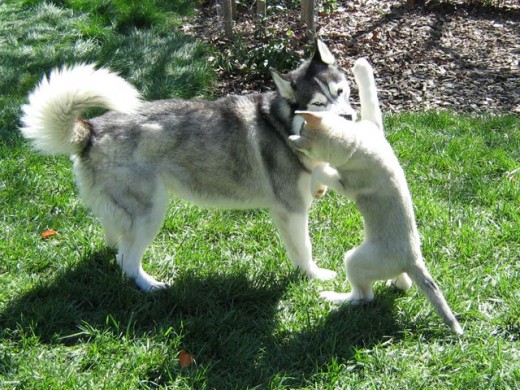
6. Endurance is key
Dog socialization is an endurance activity.
Last year, I saw this couple walking their tiny pit bull puppy. They stopped to talk, and to let their puppy “socialize” with Shania. It turned out that their puppy was 6 weeks old.
In general, it is best to only remove puppies from their litter-mates at 8 weeks or later. Also, puppies do not start their immunization injections until 8 weeks old, and they are not fully immunized until a few months after that. Exposing puppies to unknown dogs or random dog poop before they are fully immunized may put them at risk of getting parvo or some other disease.
Since that one time, I have never seen them again. Perhaps they are simply walking their dog somewhere else, but dog socialization is something that we need to continue throughout our dog’s life.
Socializing our puppy is a very good thing. However, if we lock our dog in the house or backyard once he leaves puppy-hood, he will become unaccustomed to seeing and experiencing new things. After some time, he would lose all of the socialization mojo that he got when he was young; and may become fearful when he steps out of his house.
Therefore, it is important that we keep up with some socialization throughout our dog’s life.
7. What is the end goal?

Dog socialization is not about projecting a good dog parent image, and it is not about gathering the most accolades from friends and colleagues. Rather, it is about helping our dogs cope with adversity without resorting to aggression.
Our eye should always be on our dog and not on ourselves or what others may think of our dog parenting skills.
Dog Socialization and Getting a Second Dog
Finally, general dog-to-dog socialization is a bit different from integrating a second dog or puppy into our household.
- The puppy will be living in the same house as our other dogs.
- The puppy will be eating in the same areas as our other dogs.
- There is more time to get our existing dogs comfortable with puppy.
- We have full control of all the dogs.
- We also have control over conditions in the house and backyard.
Just because a dog gets along with other dogs in his pack, does not mean that he will get along with other dogs that he meets on the street, or at the dog park.

I feel like my Shiba, a 3 yo male I recently adopted, was not socialized by the previous owners. He’s great around people and I feel that he had a lot of human socialization. But not so much other dogs. He’s okay around Golden Retrievers, but smaller dogs he usually freaks out at with Shiba “screaming”. This doesn’t happen as much when we’re not in our neighborhood, perhaps he feels that our area is his “turf”? He does this especially in our apt building stairs and lobby when he sees another dog, and its so loud, I’m afraid that the neighbors will start to complain if it happens daily when I take him outside.
Do you recommend that I find a neighbor who has a Shiba and is pretty friendly to do some 1-1 socialization? Im a bit afraid to take him to a dog park as I’m not sure what will happen.
With Sephy, I did dog-to-dog desensitization exercises to help him be more calm in the presence of other dogs. We had a great local SPCA, so we did structured training exercises there with one of their trainers and a variety of dogs that they picked. We started with very calm dogs, and then later on we did younger dogs, etc.
I also tried taking Sephy to enclosed dog parks, but I quickly realized that it was not appropriate for his temperament. He ended up learning a lot of bad habits, he would often get over-excited, lose control, and behave badly. Here are some of our experiences at enclosed dog parks.
The desensitization exercises helped to raise Sephy’s tolerance for other dogs, so he walks quite well now, and we just ignore other dogs. For playing, Sephy does best in structured small play groups, that are well supervised. He likes larger dogs that are relaxed, playful, and friendly, so I pick his playmates accordingly.
Great information, as always! You can’t oversocialize a dog!
I’m passing along a blog award, too, as I’ve found your blog really informative, esp. for people who are relatively new to dogs. here’s the link to my blog with info. about the award: http://fromthehouseofthefoxdogs.wordpress.com/2011/06/22/we-won-an-award/
Hello Lisa,
Thank you very much for the award!
I have been thinking of getting together a bunch of my favorite Shiba links, so this will get me going. 😀
Hugs to Toby, Oskar, and the rest of your gang!
I just acquired a new book from Barnes and Noble today. The title is Inside of a Dog by Alexandra Horowitz. I’ve only read through the first chapter or two, but I’m hooked already. It basically explains the way dogs perceive the world in a very scientific manner. It’s perfect for me, because I’m a sucker for science books. You should check it out, I’m sure you’d find it interesting.
Kiba’s a lot like Zeus. Nothing really freaks him out. Of course, our house is pretty chaotic and we drag him around with us all over the place now that he’s vaccinated. My proudest moment was when we went to the food carts at lunch time with around 2,000 people and many other dogs and he ignored everyone – except the one guy with the plate of ribs… 🙂
That is both impressive and funny. Smart Kiba! 😀
I will definitely put it on my book list – which keeps growing and growing. Thanks for the recommendation.
Meanwhile, I tried out the sounds of coyote this evening (only at soft volume) and it worked out well. Lara is still a bit stressed, but not as stressed as she was on the night of the Singing Coyotes.
It was funny because Sephy got all excited too, and wanted to go out and chase the coyotes away. We called him over and let him see that the sound was coming from the computer. He couldn’t be cuter because he cocked his head this way, that way, and the other way. Then he just lay down and enjoyed the singing. 😀
Another great article, Shibashake! Thankfully Zeus loves all dogs, people, bugs, you name it. He even wanted to be friends with a bee yesterday and tried to smell the bees butt (bad idea). It didn’t take much to socialize him and now he goes to dog camp at least three days a week with his friends. But one thing I was really glad that his breeder did when he was born, was play a tape of random sounds all the time. This included sirens, vaccumes, blow dryers, thunder, etc. Now he isn’t sound shy at all, he doesn’t attack the vaccume cleaner (or even move from his bed), he doesn’t freak out when it storms, he lays on my feet while I blow dry my hair… I hadn’t thought of sound socialization but I am SO glad that she did! Thanks for all the tips as always, have a wonderful weekend.
Hi Jess,
Great point with the sound socialization!
In fact, the coyotes that live in the hills nearby our house was having a singing party last night and this really freaked out puppy Lara.
Maybe I will create a coyote top 10 mix for her. 😀
Big hugs to Zeus and a Happy Weekend to your pack.