A tripod dog is a dog with three legs. The loss of a leg can be due to many reasons including cancer, leg trauma (car accident), or congenital deformities (born with a deformity).
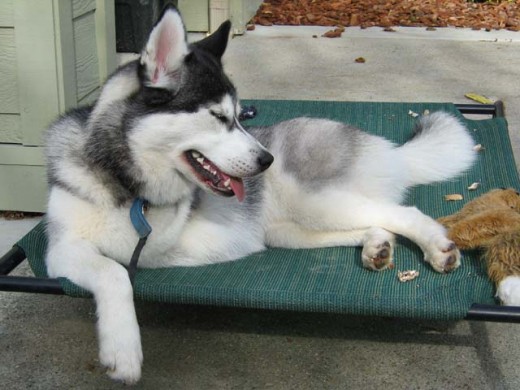
I am privileged to share my life with a three legged Siberian Husky, called Shania. She had a congenital deformity called radial head luxation, i.e., the bones on her left front leg were misaligned, and she was unable to put weight on it. This condition is rare, especially for a Siberian Husky, and the cause for it is unclear.
We speculate that it may have been from birth trauma, since she was a c-section puppy. We had hoped to correct the problem with orthopedic surgery, but unfortunately, there was too much cartilage damage in the joint, and the surgeon recommended amputation.
It was a shock when she came home with three legs, and a BIG bandage around her torso. However, Shania recovered quickly from the surgery and is now a happy, bouncy, and somewhat spoiled member of the family.
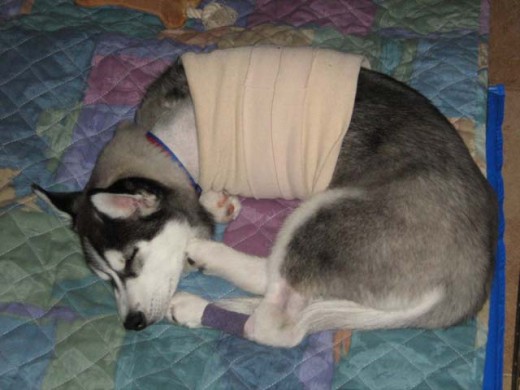
Here are some things to look out for when living with a three legged dog –
1. Keep a tripod dog slim.
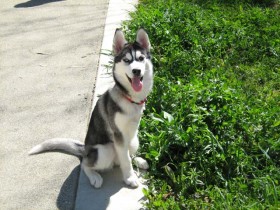
The most common health issue with three legged dogs is that they may develop arthritis earlier than other dogs. Because they are missing a leg, more stress is placed on their remaining joints, and there is more wear and tear. Therefore, it is very important to keep them slim, so that they do not have to deal with additional joint stresses from excess weight.
Feed a three legged dog a healthy and balanced diet, but do not overfeed her.
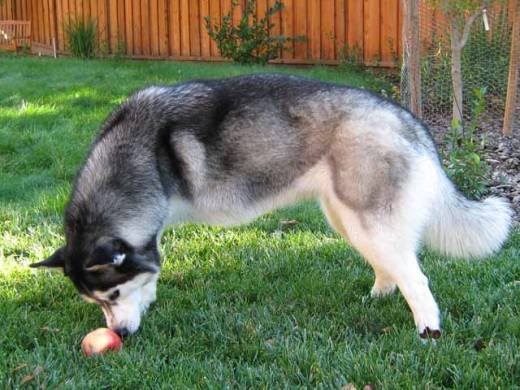
2. Keep our dog’s foot-pads clean and healthy.
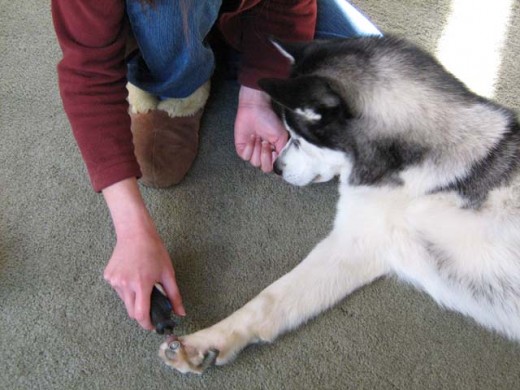
Proper foot care is very important for a three legged dog.
They may develop cracked foot-pads because of the additional weight placed upon each paw. I now apply DermaPaw cream to Shania’s footpads to help keep them protected.
Previously I was using Tuf-Foot by Bonaseptic, but I find that the DermaPaw cream brings better results, is easier to apply, and stays on for much longer than Tuf-Foot. However, Shania will often try to lick the cream up, so I apply it right before she takes a nap (e.g. when we come home from our walk), and I supervise until she settles down.
I also keep Shania’s nails short, and trim the fur at the bottom of her feet. This allows her to walk comfortably, and without slipping.
3. Watch out for Elbow Hygroma.

An Elbow Hygroma is a fluid-filled swelling around the dog’s elbow. It occurs, when the elbow bone causes trauma to the soft tissue around it. This usually happens in younger dogs who are constantly lying down, or falling down on a hard surface. It may also happen when a dog leans, or consistently places too much weight on one elbow.
As a dog matures, a callus will form to protect the elbow and prevent this condition. Dog beds may help, but some dogs prefer to sleep on cooler, hard surfaces.
Young three legged dogs are especially susceptible to elbow hygroma, because their elbow calluses have yet to form, and their activity level is high. Shania developed this condition when she was less than a year old. However, the swelling was small, and our vet advised us to let it heal on its own. In more serious cases, where there is an enormous amount of swelling and/or infection, surgery may be needed.
We now have a cool bed for Shania in her crate. It helps to keep her cool during the summer, and provides her with a nice soft surface to lie on. Remember to regularly clean and air out the water bed, so that mold does not accumulate on its wet undersides.
For outside the house, we use the Coolaroo outdoor dog bed. It is durable, provides a soft surface, and is elevated from the floor. The elevation allows free air-flow during hot days, and prevents water from accumulating during rainy days.
4. Manage slippery surfaces


Make sure that there are not too many slippery surfaces in the house.
Three legged dogs have less balance, and can easily slip on hard surfaces like wood, tile, linoleum, or marble. This is especially true when they are running or playing.
If there are many hard, slippery floors in the house, it may be time to go rug shopping! Rugs also provide a nice, soft surface for a dog to rest on.
I get natural hand-knotted rugs, that can stand more wear and tear from the dogs. Consider getting a light, earth-tone colored rug, that can hide dirt and dog hair more easily.
In addition, I check the backyard, and make sure there are no deep holes. Shania can trip on uneven surfaces and hurt herself. I also clear away large piles of sticks and leaves. Larger sticks may sometimes catch on a dog’s nails and cause damage.
It helps to get raised water bowls, so that our tripod dog can drink without having to bend down too much.

5. Let a 3 legged dog be a dog
When we share our life with a tripod dog, we naturally want to protect her from as many things as possible. It is important, though, to let a dog be a dog.
If a three legged dog is kept from doing all the things that dogs love to do, she will have lived an unfulfilled life.
“A life lived in fear is a life half lived” ~ [Spanish proverb]
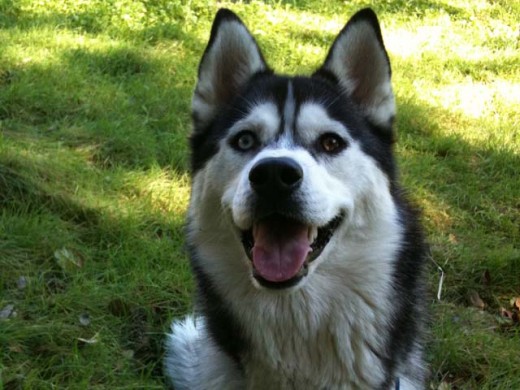
Love this story and thank you for the tips! My boy, Kiba (also a Siberian Husky), has been a tripod since he was 10 months old and he’s recently starting to have a little trouble walking (he’s now 4). He gained a little weight and his 1 front paw has developed a little spot of thinness on his paw pad, so I was looking into what creams would be recommended to protect his skin barrier. I’ll definitely be giving your recommendations a try!! Thank you so much.
DEAR SHIBASHAKE,
First, let me begin by saying your fur baby, Shania, is so beautiful and courageous.
I came across your post after hours and hours and hours of research of what to ask my veterinarian questions today because my love of my life, Kiska, (who is also a Siberian Husky) is getting her front right leg amputated this Friday after finding out she has a cancerous soft-tissue sarcoma.
I was devastated to hear the news that my 9 and a half year old was going through this and was going through all of my options. After all of the blood work, chest X-ray, Cat-Scan came back normal, talking with an oncologist, and getting a second opinion, I am now 1000% certain this is the best route for her to live with with quality of life.
As you know, Huskies are very, very active. Kiska and I go on walks (up to 4-5 miles every day before this happened), she loved hiking (could hike mountains like crazy), and play non-stop. I understand amputation will not stop this but limit her, but my question is: do you have any suggestions on therapeutic tips since you have a Husky to get here?
Another question, do you know of any support groups I could possibly join to help me get through our journey? Kiska is my life and has helped me through so many hurdles and hard times in life. I am a 100% disabled veteran who suffers from PTSD, severe anxiety, and depression.
Please email me with any extra help and tips to get us through this time together. Again, thank you so much for your post and the positive things to look forward to. I look forward to hearing from you.
Thank you,
Amy
Big big hugs to Kiska and to you as well. I know it must be a very difficult time.
In terms of support groups I would check out the tripawds website forum. I haven’t been there in some years since Shania has passed away, but it was helpful for me when I was looking for information.
In terms of care, Shania’s case was different since her amputation occurred when she was very young so I am not sure whether our experiences will apply. They key thing for us, was to control weight so that there is less stress on her remaining legs. In terms of walks, Shania would tire more easily compared to my other Husky, so we would take lots of breaks under a tree or some other shade. I always bring lots of water with me. Shania loved to sit and watch people, squirrels, birds, etc. She loved people. We would be out for hours even though we did not walk as long a distance as my other Sibe. Best times of my life.
I just rescued a 4 and half year old husky mix of some sort who just lost one of his rear legs thanks for the tips
Wonderful for helping a dog in need. It is an amazing thing to share life with a dog.
Hi there. I just applied to adopt a 2-3 yr old chihuahua that recently had a leg amputated due to deformity. I am curious how pet insurance takes into account a tripod for insuring and how it is determined that X claim isn’t related to issues with being a tripod. Obviously, something like Cushing disease (which I know about all too well with the recent passing of our 13 year old min pin, Scout) isn’t tripod related, but something like torn ACL, or a back issue, etc. How do these things play into insuring a tripod? Being special needs does not scare me. My Scout became special needs in his last 2 years, and I’d continue fighting every battle by his side for another 100 years if life allowed such. But when I got his insurance, he had no health issues so it was easy to figure out. With pre-existing conditions not being covered, I’m curious how it works.
I recently adopted an 8 month old female mix husky, she is a tripod has a missing front limb she is used to it and very active and living her life normally.
I walk her every day and take good care of her, i just need to know how much food to feed her at this age in order not to gain wait and how to add more food for her when she grows up .
Looking for a New Fur Baby/ Family member! I found a 2 yr old Ridgeback mix that is a tripod! I like your sight and hearing others comments! This is what I need to know! I have a 6 yr old Female Ridgeback mix! She is very active! Nikki needs a Friend! I’m hoping Mutley is a Fit!
hello guys, I have 6 month old Belgium malinios and he’s having his right back leg amputated 9/1/19 I’m 23 and this is my first dog I would love people to share and help with and Kenzie with our journey as I’m clueless and very scared for him and myself as I love him very much and want to give him the best care and love to help him recover and to make sure he can adapt well even if that means buying extra toys or special things for him!! thank you hope you guys can help me 🙂
Great read! Thank you for the info.
We rescued a tripod 8 y/o Shepherd last year and lately I’m noticing that his weight bearing leg (hind) is occasionally buckling. Should I be concerned, or is this to be expected at his age? He does not appear to be in pain, however.
With Shania, she had back leg weakness due to arthritis on her lower spine at almost 10 y/o. We got x-rays and tried Adequan treatments. Unfortunately we started too late. Best to consult with a good vet or specialist and catch it early. Specialist is probably best.