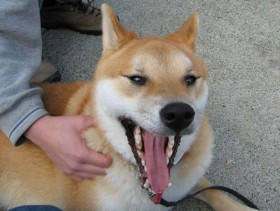
The Shiba Inu is a very beautiful dog. However, behind that foxy face, is a dominant, stubborn, intelligent, and extremely mischievous personality. This can make them a challenge to care for.
Indeed Shiba Inus are not for the faint-hearted, and they are not recommended for first-time dog owners.
Despite this warning, my heart was already set on a Shiba Inu puppy. I had a lot of free time then, so I thought I would be able to handle one little dog. After all, how difficult can a small puppy be?
Little did I know, a Shiba Inu can be a major pain in the ass!
Even dog veterans have problems with their first Shiba. In fact, many experienced trainers were unable to handle my Shiba Sephy.
Here are the Shiba Inu training secrets that helped me turn my devil dog into a model citizen. Well, maybe not a model citizen, but a fun citizen that I truly enjoy living with.
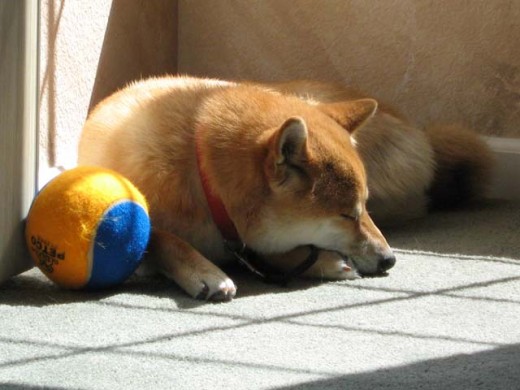
Shiba Inu Secret 1
There are No Miracle Cures.
When I first got Shiba Sephy, he was a big challenge.
Some of his favorite daily activities include biting my hands, running crazily around the house, biting on curtains, vicious leash biting, jumping on me and others, humping my leg, and much more.
I was desperate to get him under control, and did a lot of research online and off-line. I read a lot of online articles and bulletin boards. I called local dog trainers, watched all the dog training shows on television, and read a lot of dog training books.
During this time, I found something that looked like a miracle … a 10 minute Shiba online training program. According to this advertisement, there were some special “Shiba words” that will magically turn a Shiba into a Lassie. Yeah right!
Luckily, I did not succumb to my desperation, and did not buy this product.
The fact is, there are NO “miracle cures” for training a Shiba Inu.
The secret of Shiba training, is simply to exercise extreme patience, and find humor in our Shiba’s antics. Use reward obedience training, and always be firm but fair.
A Shiba will probably never be a Lassie, or perfect dog. However, if you are looking for a dog with a big personality, who will always make you laugh with his sneaky and roguish ways, then the Shiba Inu is for you.
Shiba Inu Secret 2
Use Passive Resistance.
The best way to deal with Shiba Inu misbehavior is through passive resistance.
Shibas get bored easily and do not like being ignored. They really enjoy their freedom, and also like being close to their human pack. We can control a Shiba best by controlling these most desired resources: our attention, and his freedom.
If we actively try to stop our Shiba either through physical punishment (e.g. alpha rolls. leash jerk) or active restraint, he will fight back. This encourages him to practice rough play, and biting on people.
If we back away, or become fearful of our Shiba, he will learn that he “wins” by showing dog aggression.
If we over-correct our Shiba by exerting too much physical force, or by correcting him too frequently, we will lose his trust, and it is difficult to regain a Shiba Inu’s trust.
What works best with a Shiba is NOT to engage in a physical competition, but rather to engage in a mental one.
There are certain resources that Sephy really enjoys including walks, treats, toys, and his freedom.
When I want to take him on his walk, I go to the door with his lead, and call him to me. Initially, he would dally and not really want to come, because he wants to go walking on his own schedule. I count to three. If he does not come, I leave and go about my own business.
After a short time, Sephy will amble over, and pester me to take him on his walk. This is done through begging, and whining. I ignore all this bad dog behavior. When I have a break in my schedule again, I repeat the above exercise.
A Shiba will quickly learn that to get the resources that he wants most (e.g. go on walks), he has to do it according to our rules, and our schedule. It is important to practice the Nothing in Life is Free (NILIF) program with a Shiba.
Set a Shiba Inu up for success, so that we can reward him frequently, and keep him interested in doing what we want.
Another Shiba favorite is to steal something he is not supposed to, and then run away with it, thereby engaging a fun chase game.
A Shiba Inu is very agile, and it will be difficult for us to catch him. I always try to keep an eye out for my sneaky Shiba, and stop him before he steals an object. I also put a drag lead on him, so that I can easily catch him by stepping on the lead.
Note: Use a regular flat collar with the drag lead, and not a training collar. Training collars such as prong collars or choke chains, should only be used during supervised training sessions. Cut the loop on the drag-lead, so that it does not catch on anything in the house.
Shiba Inu Secret 3
Rules, Rules, Rules.
Shiba Inus are naturally dominant. If we do not provide them with rules, that we consistently enforce, they will take over the house.
It is best to enforce those rules as early as possible. This ensures that Shiba does not develop any bad habits later on, that will be more difficult to break.
Some of Shiba Sephy’s rules:
1. No Biting
The most important rule that I place on Sephy, is no biting on people. Shiba Inus are a very mouthy breed. Their instinct is to use their mouth in a wide variety of situations, including when they are excited, frustrated, and fearful.
They also have large teeth, and can accidentally hurt children and seniors. If Sephy starts biting on me or on others, I no-mark the behavior (Ack, ack). If he continues, I put him on a time-out.
It is also important to teach a Shiba bite inhibition. In this way, when he loses control of himself and does bite, he will not cause much harm.
2. No Food Aggression or Resource Guarding
Prevent our Shiba Inu from guarding resources. Shibas have a don’t back down, don’t surrender attitude. Therefore, the best way to teach them not to guard resources, is to use reward training techniques.
Show them that people and other dogs coming near them, while they are eating or playing with their toys, is a good thing. Prevent stealing, and practice exchanging objects. This teaches them that giving up something, does not mean it is gone forever.
If we use physical force to grab a toy away from our Shiba, he will likely become more possessive over his objects. He will also lose trust in us, and may use aggression to protect himself, and his belongings.
3. No Rough Play
I do not play rough with Sephy. He gets to wrestle with my other dogs, but no wrestling is allowed with humans.
I also do not play any dominance games with him, for example, no Tug-of-War. The few times that I did play Tug with Shiba Sephy, he followed very strict rules during the game. However, when I took him out for walks, he would start playing tug with the leash (leash biting).
Shiba Inu Secret 4
Socialize Our Shiba Inu.
Shiba Inus can get aggressive to unfamiliar things including objects, dogs, people, and environments.
They are also naturally stubborn, and may become aggressive when forced to do things that they do not like.
Socialize our young Shiba to many sights, sounds, and smells, and he will be ready to handle new things as a confident, and well-balanced adult. Make sure that new experiences are always positive, and at worst, neutral.
Some things to consider while socializing our Shiba Inu:
1. Shiba Inus have an extreme play style, that many dogs may not like.
When he was young, I used to take Sephy to enclosed dog parks. During this time, his favorite play partners were larger dogs, and young Pit Bulls. Shibas like doing wrestling and rough play, which can easily overwhelm other small dogs.
Choose our Shiba’s play-mates carefully, so that a fun time can be had by all.
2. Shiba Inus dislike handling.
Socialize a Shiba to touching and grooming, as early as possible. Pair the touch and groom sessions with very good treats, so that he will associate handling with positive experiences.
Do not use physical force to do any grooming. This will make it into an unpleasant experience, and our Shiba will fight us every step of the way.
Instead, groom gently, and make it short, fun, and rewarding.
3. Shiba Inus do not generally like people petting them from above.
Petting from above can be seen as a dominance move by dogs, and Shibas may see this as a threat.
We can slowly desensitize our Shiba to this move, by pairing head petting with good food rewards. At the same time, instruct people to approach from under our dog’s head, and scratch his chest.
Shiba Inu Secret 5
Control Our Own Energy.
An important thing to remember while interacting with our Shiba, is to control our own energy.
Shiba Inus are especially sensitive to the energy of their owners, and the people around them.
When I first got puppy Sephy, he was extremely mouthy. In particular, he would resort to biting when I stopped him from doing something unacceptable.
This made me become afraid of him.
The more afraid I became, the worse Sephy behaved. As soon as I got fearful, he would start to hump my leg, grab my clothes, jump on me, or bite my hands, arms, and legs.
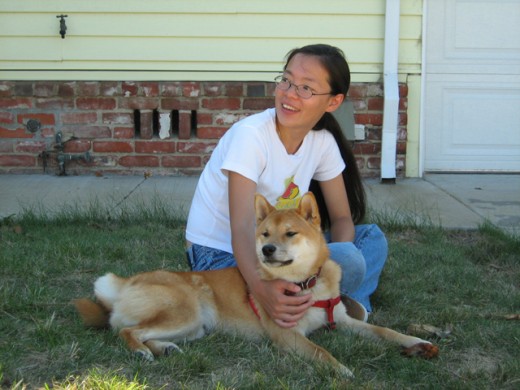
Anger and frustration will also elicit extreme Shiba behaviors.
In the early days, I had a dog walker take Sephy out for group walks at the park. When the walker tried to stop Sephy from doing something disruptive, he would object, and try out one of his Shiba moves, including alligator rolls, leash biting, hand biting, and of course the Shiba scream.
The dog walker naturally got embarrassed when Sephy screamed like he was about to die. There were other people around, and some of them thought that she was mistreating the poor dog. Sephy easily sensed her embarrassment and frustration. From then on, the Shiba scream was his favorite weapon to use against her.
With a Shiba Inu, it is important to stay calm at all times.
If we lose our cool, Shiba will sense it and continue to use this weakness against us.
The best way to handle a misbehaving Shiba, is to stay calm, and remove him to a quiet, lower stimulus area, as soon as possible. If he continues with his bad behavior, he gets his freedoms revoked with a time-out. Remember that fear, anger, frustration, and other extreme emotions will only make the problem worse.
Once I was able to control my fear and remain calm, things improved significantly with my Shiba.
Sephy will never be a model-citizen, but nowadays, he is actually very fun to be with. He is goofy, he is funny, and he usually stays out of serious trouble.
Shibas can be a big challenge to live with, but they are well worth the effort. They have a great personality, and they are always up to something that will make us laugh.
I love my Shiba Inu.
He is one of my best buddies, and whenever I see him, I just have to smile.
I recently adopted a 5 year old rescue Shiba named Kiari. She is a smaller Shiba, about 16lbs and really good with people and kids. She loves her toys and going on walks. The only thing she seems to be not too fond of is other dogs. When we are on walks and she sees other dogs she always tries to go towards them and occasionally barks. I have her on a harness instead of a collar and she’ll pull to the point where her front paws are off the ground. I haven’t let her get in reach of any dogs yet so I’m not sure what will happen if she gets near one. Any tips on getting her to be more social?
Thanks
I have a 3 yer old fixed male Shiba and a 5 year old fixed rescued female Shiba. It took me about a year to get “Cricket” to come in. She had been left in a crate for 3 years and didn’t get a lot of personel attention. She still doesn’t like to come in. I don’t want her to sleep outside in the winter as we live here it gets cold and ‘Suke” sleeps in the house. Any hints on getting her to “come” and “stay” – I can’t get her to do this. I need help. She’s been in 1 public class and one private class.
Hello Dot,
It is difficult to say without knowing more about Cricket. What does she do when she is outside? When she comes inside, does she get a lot of attention? … perhaps too much for her? What does she do when she is inside? What does Suke do?
My two Sibes also like being outside. They love digging, they like the cooler temperature, and they also like smelling the air. They also really love food though, so they will definitely come in when they smell dinner!
I make them work for all of their food, so they end up spending a fair amount of time inside doing that. They also like playing with other inside the house because Shiba Sephy does not usually go outside.
I also make sure that puppy Lara does not pester the other dogs when they just want to be left alone.
Here are some things I did when introducing Lara her housemates.
http://shibashake.com/dog/second-dog-introducing-a-second-dog
We have a rescue dog, a Shiba. She’s has separation anxiety. Will go nuts trying to get out of the house to find us. What can we do, besides kenneling her all the time?
Hello Kathy,
Desensitization exercises may help.
http://shibashake.com/dog/separation-anxiety-dog-why-how-reduce-dog-stress#desensitize
Your website has helped me so much! I have a 3 month old Shiba named Hoshi. He’s actually a very calm little fellow and we haven’t had too many problems with him. He did like to bit a lot, and he’s still pretty bitey but he’s gotten so much better. Thank you for all of the useful information! Your dogs are beautiful.
Hello Nevena,
Congratulations on your new Shiba puppy! A calm Shiba is a very good Shiba.
Thank you very much for your kind words and BIG HUGS to Hoshi! Take lots of pictures and share some with us.
I own a little puppy Shiba Inu who is 10 weeks old. She loves to bite on everything, eats the bitter stuff to stop her from chewing, and when you try to stop her from biting your hand she tries to bite your face.
I don’t know how to get her to stop thinking people are chew toys. Is there any tips you can give me so she will stop this?
Hello Emily,
Congratulations on your new Shiba puppy!
This is what I did with my Shiba when he was young and prone to biting-
http://shibashake.com/dog/puppy-biting-how-to-stop-puppy-biting#timeout
Here are some other things that helped me with Shiba Sephy when he was a puppy-
http://shibashake.com/dog/puppy-obedience-training
When Sephy was young, he was very energetic and easily excitable. Giving him a lot of exercise also helped to drain some of his crazy hyper energy.
Hello! I really enjoyed reading your article. I have adopted a Shiba from the animal shelter. She’s very sweet, a little aloof and independent, but that’s the thing I love about her. I’ll be able to take her home in the next week so I’m reading up on how to train her. I’ve always wanted a Shiba, but was always turned off by the warnings, “They are extremely hard to train.” I’ve had a few dogs in the past, but they were always given away (My parents really aren’t animal people and really don’t understand that dogs need patience in order to train them. They are not born trained). So, I guess I’m not a first-time dog owner. But reading this article makes me feel like I’m getting a heads up. That I’m definitely not going into this thing blind. So, for the next couple of days, I will be reading your website for all the info I need. Thanks again!
Hello Natalie,
Congratulations on your new Shiba! 4 paws up for adopting a dog in need.
Share some pictures with us when you get her, and let us know how it goes.
Hi I wanted to thank you for the information on this website as it has helped me greatly with my Shiba. I have a 9 month old, strong 23 pound female Shiba who loves to be outside. She is also a great hunter, as she managed to kill two birds before she was 5 months old, and since then has nabbed another bird and two voles. It took forever for her to drop them too because she was so proud and happy of her kill, I love seeing that little curly tail wag. But my question is that it’s starting to get cold here in PA and since I take my Shiba Jada for a walk almost everyday and since she spends a majority of the day outside, as she’ll just sit on the step watching birds and planes (she has incredible eyesight)I was just wandering how cold it can be outside before they need to wear a coat or something.
I know they have thick fur and she doesn’t seem to mind the cold so I was just curious if they even needed one.
That is impressive. I think Sephy would just run away with the stuff and try to start a chasing game.:D
It doesn’t get really cold here, so I haven’t gone through any truly freezing temperatures with Sephy. Also Sephy really dislikes wearing anything on his body. I did consider getting some shoes for him because he does not like getting his feet wet, especially cold and wet. However, shoes would only help for supervised walks and not for more rigorous activity as they would quickly fall off.
How is Jada in terms of wearing things?
Here is an interesting thread on the Shiba Inu forum about whether Shibas need jackets-
http://www.shibainuforum.org/forum/discussion/8890/coats-or-jackets/p1
Well I really haven’t tried putting on shoes or a jacket so I really don’t know yet. She does wear a harness for walks because she does like to pull and it’s much easier to correct her mistakes with a harness and I don’t have to worry about choking her. So she doesn’t seem to mind the harness at all. I should check into getting her shoes cause when it did snow here she loved it and wanted to stay outside all day.
So my guess is she probably wouldn’t mind wearing a jacket but it doesn’t really get too cold here but when it’s in the low 30′s and she’s been out there for two hours is what raises concern especially when its really windy.
I’ll look into the forum for some more info. and thanks for your input.
Hi there!
Thanks a bunch for writing this great article!
I’m getting my Shiba Inu puppy early Februari. I’ve really read into the breed before deciding to get one, and now I’m focusing on how to train and raise my dog, so she’ll be a great companion. You article has a lot of really helpful tips and information. I especially love the concrete advices you give on how to cope with the Shiba’s personality.
It looks to me as if patiënce, perseverance and positivity are some of the key words here.
Being a cat owner myself, I am used to animals having a will of their own, and I’m used to the fact that it can take a LOT of time to get my cats to ‘listen’.
Anyway, I’ve added this article to my favourites, and I’m sure I’ll be reading it again of my oh-so-cute puppy is giving me a hard time.
Thanks again for taking the time to write this!
Kind regards,
Ruud
The Netherlands
Hello! I’ve been doing a lot of research on the Shiba Inu, and I’ve come to love it so much. Recently my Shitzu passed away from old age and I’ve been really quite lonesome without a dog. I was thinking about getting a Shiba within a year or two.
Currently I’m a college student, so I’m planning to wait till I have more time to spend and train a puppy. I live in a large house with a medium-sized backyard, but there’s a trail near my house that I go walking at. There are no little kids here and we have one slightly crazy old grandmother, but everyone in my house is pretty much an adult. We’ve had a whole bunch of dogs before, but if I do end up adopting a Shiba puppy, it will be the first dog that I have personally raised. I know it’s quite a long time to worry about getting a Shiba (I always do over-researching on things like pets or colleges;;), but I was wondering if my home situation sounds fine (I don’t want to bring a Shiba into the wrong kind of environment) and if there are any tips for a (hopefully) new-Shiba owner. Like are they noisy? And what should I do if they are noisy and unleash the Shiba scream (I heard it when I was young and it scared the youth out of me for awhile).
That is a really good practice. I didn’t do enough research before getting my Shiba and it was not good for us in the beginning. I could have saved myself and my Shiba a lot of pain if I had been more prepared.
Sounds like you have a great environment. Sephy loves to go hiking and playing with us in the backyard. The only thing is that Shibas tend to love routine and may get really stressed when there are large changes in their life. Sephy is pretty high strung about changes, so I try to keep things as stable for him as possible. Shibas misbehave most when they are stressed.
In terms of noise, Sephy is actually a pretty quiet dog. He will bark when there are people or dogs close to the house to alert us, but he stops after we go and check things out. He did do a lot of Shiba screaming when he was young, but after we switched to using reward training techniques and learned how to properly train him, he got a lot better. I haven’t heard him Shiba scream in a long time.
Sometimes we will have howling sessions with all our dogs. It is pretty fun and I think the dogs like it.
Good luck with college. What are you majoring in?
Hi:) I have a 7 and a half month old male shiba inu Tuffy.He’s been with me since he was 9 weeks old, we live in NY and he was shipped to us from a breeder in AK. Tuffy being a shiba does what tuffy does,lol we have been applying training consistently with him from day 1. He is a really good dog but true to his breed so very stubborn and suspicious of everyone and everything (yes that includes every car, every shopping bag, every garbage bag on streets, every person walking on street hell even the wind and leaves rolling by). So my problem is… Tuffy being an escape master , he always tries to run away , lately he got a little better but still if there’s a loud bang, a loud car driving by , fireworks etc. he will take off like a bat outta hell. I worked really hard with him on walking, we live across a huge park , and that’s where I take him for walks everyday. He loved going to the park running ( on leash) and playing with other dogs, BUT here comes the issue, he got neutered 2 weeks ago, and now every time I take him for a walk he pulls on the leash, get’s scared after a little bit , pee’s and run’s back towards home, he doesn’t even want to do his business , he just wants to be out of there, if he see’s another dog he looks interested but then when the dog comes nearby he run’s away and doesn’t want to play. I have also started noticing that now the anxiety of moving objects and sounds is way worse then before, even leaves and trees rustling with wind scares him out of his pants. I don’t know how to fix this issue, it took me months to get him accustomed to his “walking” routine, and now we are back to square one, which is really frustrating as even though he is potty trained, he does not want to do his business in home anymore, it has to be out,yet he is afraid of everything outside.it really makes me sad, and sometime cry because I really want him to be able to enjoy his walks and play in the park and not be so afraid all the time. Anyone got any suggestions please:) Thanks.
Hello Maha,
My new Sibe puppy Lara was also pretty anxious when we go on our walks. Some things that helped with her -
1. First we only went on very short walks and very close to home. This helps to get her outside and also helps her build confidence because every walk ends well and on a positive note.
2. Luckily, our area is next to a quiet hiking path so I would just take her there. There is usually no one around and it is very quiet. This also helps her build some confidence. Another possibility is to drive to such a location.
3. Now Lara is used to going to the quiet parts, so sometimes we will venture into the more noisy areas. Usually though, we go to the quiet parts first, which helps to build her confidence, then if she is up to it, we explore a bit of the new areas at the end. I make sure not to overdo it though because I want to set her up for success.
4. Together with the walks, I am slowly desensitizing Lara to the things that she is most fearful of, e.g. sound of coyotes, garbage truck. We are currently working on skateboards. Here is a bit more on the desensitization process -
http://shibashake.hubpages.com/_srec/hub/Dog-Anxiety-Fearful-Dog
This article on dog anxiety may also be of interest.
Hope this helps. Big hugs to Tuffy and let us know how it goes.
Hi, I have a 8 month old female shiba who is just getting out of her first heat cycle (I had planned to get her spayed but some financial problems have come up) and she has become extremely aggressive towards the other female dogs in the house. She has grown up with them and haven’t had problems with this before but now she will bite the other females if they come near her and she wont let go and has broken skin. The other females our chihuahuas and quite a bit smaller than her and if this keeps up I’m worried I’ll have to find another home for before she attacks them again. Can you give me any advice to resolve this quickly,please?
Hello Juli,
I am not a breeder so I have not experienced what you describe above. Based on conversations with my Sibe breeder, she usually keeps her un-spayed female separate during the heat cycle. From what I have read, hormonal changes during the heat cycle may cause irritability, nervousness, and pain, which can cause changes in behavior.
Here are some general things I do with my dogs to help them get along-
http://shibashake.com/dog/second-dog-introducing-a-second-dog
I’ve been reading your articles since I even before I brought home my 8-week old shiba puppy Akira three months ago. She has quite a few un-shiba like quirks – a social butterfly, and doesn’t mind cuddles and hugs. She’s not that difficult to train either. However, she keeps jumping on all dogs especially big dogs and is quite intrusive; the type that Sephy would hate. I’m having a difficulty determining whether she’ll grow out of it or whether it is something I have to train her out of. She’s still a puppy so I think most of the big dogs tolerate it for now, but it’d be great if you would give me some advice. Thanks!
Hello Jessica,
Congratulations on your new Shiba puppy!
Actually, Sephy is like that as well, especially with certain types of dogs, e.g. German Shepherds. In particular, he gets in the dog’s face and tries to initiate play. However, he only does this when he feels like it, and only with certain types of dogs.
At the same time though, he does not like any new dog sniffing his butt.
With Sephy, I focus on creating neutral experiences with other dogs. We pass by other dogs calmly, and without any greeting. This gets him into a more calm mindset, and teaches him to ignore other dogs rather than getting over-excited and losing his mind, which was his default mode of operation.
Sometimes, I let him meet dogs that are calm and under good control of their owners. However, I always keep greetings short and call him back to me after a very brief period.
I also did a fair amount of desensitization work with him with other dogs.
http://shibashake.com/dog/dog-to-dog-aggression#desensitize
I am a big proponent of setting our dogs up for success, so I carefully manage things and only expose Sephy to experiences that I know he can handle and will result in a positive outcome. The more success he gets, the more confident he becomes.
Some people believe in “letting the dogs work it out for themselves”. I think this can be very risky, because a strong correction from another dog can create a lot of stress. This can cause a dog to become fearful or it can cause dog to fight back, which will encourage aggression.
I only let Sephy play with non-dominant, playful dogs, that like his wrestling type of play style. I also keep play groups very small (usually only one on one) and very highly supervised.
Here is an article on some of our experiences with dog-to-dog aggression -
http://shibashake.hubpages.com/_srec/hub/How-to-Deal-With-Dog-to-Dog-Aggression-Aggressive-Dog-Bite-Biting-Dog
Big hugs to Akira. She sounds totally adorable!
I have to say that I love your description of a Shiba’s attitude, because you nailed it! Sumo is my 6 (almost 7) year old Shiba. He is my best friend and every day I look forward to coming home to my goofy guy. I have been in animal care for a long time so I knew that when I got him, socialization would be key. Well he loved to dog park and meeting new friends, up until about 3 years ago. My friends German Shepard grabbed onto Sumo’s tail, totally unprovoked. Out came the Shiba scream and panic on my end. He recovered from a pretty badly bruised tail after about 2 weeks, but has never quite recovered from the trauma. I notice that he specifically get very cautious around German Shepards (go figure)but even sometimes he gets that way with other dogs. He has a best buddy who is a Golden Retriever and they still get along fine and even with my friends very shy dog he is fine. But I hesitate to take him to a park because I don’t want him to get in an altercation or to stress him out. I tried the park and a couple times he was okay but you can tell he would rather just be on the outside looking in and walking around exploring the area. Any suggestions on how to get him to be a little more relaxed with other dogs? Also he has been a counter surfer his whole life and no matter what I try I cannot break him of that. Thank you so much and again you have a great site and Sephy is a one lucky pup!
Hello Cait,
Yeah, that has been my experience with Sephy as well. I took him for a few months but it was really hit or miss in terms of the mix of dogs. Sephy was also learning and practicing bad behaviors at the park.
http://shibashake.com/dog/enclosed-dog-parks-good-or-bad
Ultimately, what worked out best for Sephy was to have one-on-one, highly supervised play sessions with friendly., playful dogs.
In particular, I took Sephy to our local SPCA and we had one-on-one playing/training sessions with the dogs there. It was great because they always had new, playful dogs, and we also did some dog-to-dog training together with the SPCA trainer.
What helped with Sephy is doing desensitization exercises with him so that he is not as reactive to other dogs.
http://shibashake.com/dog/dog-to-dog-aggression#desensitize
Here are more of our experiences with other dogs -
http://shibashake.hubpages.com/_srec/hub/How-to-Deal-With-Dog-to-Dog-Aggression-Aggressive-Dog-Bite-Biting-Dog
With Sephy, I am usually around to supervise him, so when he jumps up to counters I give him a warning. If he ignores that, he goes to timeout. He doesn’t have the opportunity to steal anything off the counters so it is not very rewarding for him.
Another possibility is to use a sound or sonic scat mat. These emit an unpleasant sound when they are stepped on.
Sofa Scram Sonic Dog & Cat Deterrent Repellent Mat Trains Dogs and Cats to Scat!
I have never used those before though. I am not sure if a Shiba may just decide to attack the mat.
[** Note there are also shock scat mats which are risky and dangerous for a variety of reasons. I would not use those.]
[...] Are you in some problems with your Shiba Inu:,shiba inu training institute,shiba inu training books,all about shiba inus,aggressive shiba inu,how to pronounce shiba inu,shiba inu cats,shiba behavior,shiba shake [...]
I have a 14 month old female Shiba and a 4 year old rescued Sheltie. They get along great as the Sheltie lets Kota do whatever she wants. They both sleep in kennels and are kenneled when alone. Recently, Kota has decided she does not like her kennel and cries all night. I have tried ignoring her so she does not “win”. I let her outside just in case she has a tummy ache and then put her back in her kennel. But after 3 weeks of no sleep I’m getting frustrated. Any suggestions?
Kota Bear is also a runner but we have her micro chipped and just make sure nobody lets her out without her lead. I figure its our fault not hers if she gets out as we know that about her.
Is her crate in your bedroom?
My Shiba really likes to be with us when he is sleeping at night. He used to cry at night, but after we moved him to the bedroom his whining stopped. My Sibes are a lot more flexible and prefer to sleep outside during the warm weather.
Very rarely Shiba Sephy may fuss if he wakes up from a bad dream. In these cases I let him leave the bedroom, but once he leaves I close the door so he doesn’t get to come back no matter what. In this way he learns that if he whines, he doesn’t get to be in the bedroom with us.
Hope this helps. Hugs to Kota Bear and Sheltie Bear!
Hello,
I like your page very much because it is helpful. Although we have no Shiba Inu yet but is thinking of keeping one. We live in Tokyo and the owner of the house doesn’t want any pet on their premises. I talked to the owner this afternoon and he will think about it and will get back to me by Saturday this week. I’m keeping my fingers crossed that he would finally say “Yes”. My daughter and myself love to have Shiba a few years back but we have no luck to convince the owner of the house to allow us to have one.
Again your site is very helpful especially for people like me who is a beginner (just in case and I hope so).
Thanks and best regards,
Hello Cherrie,
Thanks for your very kind words.
Hope the owner of the house gets back to you with a positive answer. Good luck!
Hi there! Your site has been so helpful with training our new 10 month old shiba. I’ve really been debating the training method to use with her and after reading your experiences it really inspired me to think of alternative/positive methods first! I would hate to break her trust or have her lose her sweetness because I was too forceful.
I was just wondering…what do you mean by non-mark ack, ack? Do you just literally say “ack ack” or what does that mean? Also, does Sephy willingly go into time out or do you have to carry him into the time out area?
Thanks so much!
Hello Anh,
The ack-ack is just a non-mark. It is used to communicate to the dog (in a consistent way) that she is doing something undesirable. This is similar to a mark (e.g. Good) for when a dog does something desirable.
Sometimes people use “No” as a non-mark but I don’t usually use that because “No” is a common word that I also use in conversation with other people. As a result, it may confuse my dogs and they may think that whatever they are doing is wrong when actually I am just talking to a friend. That is why I use/say Ack-Ack because it is unique and I don’t use it anywhere else. You can use anything as a mark or non-mark as long as it is unique.
I lead him into the time-out area using his drag-lead (only with a flat collar). I would not recommend carrying because Shibas are already not the most accepting of restraint and hugs. Carrying a Shiba to time-out may further cause her to associate the carrying action with a “punishment” so she may not want to let you carry her any more in the future. In general, it is best to try and make restraint, hugs, and carrying into a positive experience for the dog.
http://shibashake.com/dog/puppy-training-tips-and-advice#draglead
Hope that makes sense. Let us know how it goes.
Thanks so much for the response! I see what you mean now, saying Ack Ack is just another way of saying No. I wasn’t sure what non-mark meant.
Hey
Just had a quick question for you. My shiba is about 9 months old and he’s getting to the point where he’s too big for the small side of a dog park but not quite big enough for the big side. He does the same thing too that you talk about; he like to be “too” playful with much bigger and aggressive dogs. How did you handle that? It just seems like he thinks all dogs want to play with them and their growling and rough handling of him just makes him want to play with them even more. any advice? will he just grow out of that phase or should i just never take him to the big side again.
Hello Tommy,
I used to take my Shiba Sephy to the dog park but I have stopped taking him. There are many reasons for this, one being that he was learning a lot of bad habits at the park. The more chaotic and unstructured nature of dog parks just did not suit Sephy’s temperament.
When we did go to the parks we go to the large dog section. Sephy is a big Shiba – he is over 30 pounds, so small dogs easily get overwhelmed by him.
In the big dog area I have to supervise him pretty closely so that he only plays with the more relaxed and less dominant dogs. As you say, there are some dogs who do not want to play with other dogs, and may get aggressive when another dog comes into their space.
I know that if that happens Sephy will not back down, so it will not be a good outcome. This is another key reason why we stopped going to the enclosed parks. All it takes is one dominant and aggressive dog …
Here is more of our dog park experiences and reasons why we stopped going -
http://shibashake.com/dog/enclosed-dog-parks-good-or-bad
But each situation is different and it also depends a lot on the dog park and the people who frequent the park.
hey my shiba does not get along with other dogs
Yeah Shibas can be very particular when it comes to meeting other dogs. They are usually very protective over their personal space and do not like other dogs invading their space uninvited.
Here are some of the dog-to-dog socialization experiences I had with my Shiba -
http://shibashake.com/dog/socializing-a-shiba-inu-to-other-dogs
Hello, our shiba inu, Yuki is only 10 weeks old, though, she keeps peeing on the carpet and not outside, how do i get her to pee outside instead?
Hello Annie,
Shibas are usually pretty clean and will quickly learn to potty outside.
With my Shiba Sephy, I set up a very fixed routine for him, and took him outside after every nap session and play session. I also fed him at very regular times so that his poop schedule was also more regular.
Then every time he pees outside, I praise him very well and reward him with yummy treats and a fun game. Very quickly he learned to go to the door and alert me whenever he needed to go.
I also supervised him very closely so that if it looked like he was about to go inside I would quickly take him out. If he is in the middle of pee-ing inside, I non-mark him (ack, ack), interrupt his pee, and take him outside.
In this way he learns that potty outside = a lot of rewards, potty inside = undesirable and no rewards.
Here are more of my experiences with potty training -
http://shibashake.com/dog/dog-potty-training-facts-and-myths
Our biggest problem with our Shiba, Kaiko, is that he will not come when called. If he has the opportunity to escape the house house he will take off and not stop! I am so afraid he will get run over! He thinks it is a big fun game! The last time he did it which was Sunday, we decided to basically ignore him all day. He knew we were upset with him, tail down most of the day. Help!
Heh, yeah Shiba Sephy does not come when called either. Part and parcel of the whole “Shiba gig”.
Here are some of the things I do with Sephy to prevent escapes -
http://shibashake.com/dog/dog-escape-why-dogs-run-away
I have a two year old Shiba which is weighing in at around 17 lbs. When we are not home she is in a safe room with toy and her crate (which she loves). When bored she takes to scratching the sheet rock. I tried using hot peppers on the wall she just finds another spot. Any suggestions?
Hello Kevin,
My Sibe puppy Lara also likes scratching and biting at my kitchen cabinets when I tether her in there. A couple of things helped to stop that behavior -
1. Supervision. I made sure to tether her when I was around to supervise so that I can teach her that I did not want her scratching at the cabinets. When she does that, I would come over, non-mark her, and get her to do something else. If she starts up again as soon as I leave, then she goes to timeout. This way, she learns that scratching at cabinets is not something I want her to do.
2. Alternative digging spot. Some dogs really like to dig. Siberians especially are really into digging. Therefore I let puppy dig in the back, non-landscaped area of my backyard. I did a bit of training with her so that she understands that she is not supposed to dig in the front. Now she has a lot of fun digging in the back. My other Sibe keeps my yard clear of gophers and such, so she earns her keep and gets to have digging fun as well.
Another thing I considered was to get some old carpeting and then mount that up on a wall or some other structure. Then teach puppy to scratch on that as an alternative to the cabinets. However, puppy has stopped scratching on the cabinets, so I haven’t tried out the carpet idea yet.
dear shibashake,
I have a one year old shiba inu and basset hound. She is a rescued dog from Taiwan and is very sneaky. Usually when my family leaves the house she would be in the house. She had been good not stealing food, but now she steals food all the time off the counter like bread and bagels. today she got peaches. I have taught her to sit shake. but, she wont come when i call her. My mom got chickens and it is important that she knows how to come. to of our chickens past away due to our dog. Any tips on how to teach her now to lye down and come. Anything to stop stealing? thanks!
Hello Mia,
Yeah Sephy really loves to steal things as well. Initially, supervision is very important. Every time he tries to jump onto the counter I non-mark him and take him to timeout. In this way he learns that jumping up on the counter = no food and loss of freedom.
However, this only works if I can supervise him and prevent him from getting the food or objects on the counter. Otherwise, if he keeps getting stuff off the counter, then he is being rewarded for that behavior, and he will keep repeating that behavior.
When I was too busy to supervise him during puppyhood, I put him in his crate or in his play room (where there are a lot of toys but no counters). This prevents him from practicing the counter stealing behavior and getting rewarded for it when I am not around.
Other possibilities include using sound aversion techniques –
- Sound scat pad.
- Putting metal bowls on top of the counter, so that if he knocks them down, it will make an unpleasant clanging sound. Make sure to only use light bowls that can’t hurt the dog.
As for recall, Shibas have a stubborn personality, and it is difficult to get 100% recall with them. If there is something else that is more interesting, they will go do that instead. Since Shibas are hunting dogs, chickens are very high priority. It would be difficult to trump that natural instinct to chase after prey. It may be easiest to simply keep Shiba in a different area than the chickens.
I was wondering about the the hair that raises up on the shiba inu’s back when it’s mad or excited. It’s like a ruffy little mane thing.
Also, how often should a shiba inu be bathed?
Thanks!
Sincerely,
Cindy
Hello Cindy,
Yeah, it is actually something that many dogs do – “raised hackles” (piloerection). As I understand it, animals do this so that they appear larger and look more intimidating. However, dogs may sometimes also do this when they are excited.
Also, how often should a shiba inu be bathed?
Shibas tend to be very clean dogs so I don’t bathe my Shiba much. When his fur starts feeling a bit grimy, I play the water hose game with him, and that usually gets the dirt out.
“Not more than once a month” was the advice I got from my breeder. Bathing too often can result in dry skin and may wash away essential oils from the coat. Show dogs probably get bathed more often depending on show schedules, but I only give my Shiba a bath when he needs it.
Hello There!
First let me start by say that your website really warmed my heart and made me smile when I really needed it! We have a 2 year old Shiba who I absolutely adore. His name is Koda and we have had him since he was 8 months old. Koda and I were able to bond a lot when my fiance was deployed to Kuwait for 4 months and he was the perfect dog to have by my side when I was alone. When he was gone Koda instinctively took on the protector role and made sure nothing bad could possibly happen to his mom! When I read your stories I laugh because I picture Koda doing the exact same things as Sephy does. The reason I am writing is to ask for advice on disciplining. Koda’s life recently changed when a family member moved into our home temporarily and we can tell that he has not adapted well at all however the worst problem we have experienced was two recent displays of toy aggression. I have read many articles but I am not sure they will work with a dog with a personality like his. Since the two episodes of the aggression we have completely cut Koda off from having chew toys I know this is probably not best fix but for now this is what I had to go with. Because of these episodes I am extremely fearful and I am sure that this is not helping the situation. My main question would be how do we integrate chew toys back into his life successfully and what is the proper way to handle him should he try to bite us when trying to take them back?
Hello Melissa,
Yeah Shibas do have a pretty strong protection/guard drive. Sephy used to protect his stuff when he was a puppy. During walks he would always try to put everything he sees in his mouth, and I removed all of those things by force. This made him associate me coming over to him with “losing his stuff”. As a result, he started to protect his resources.
Some things that helped with Sephy -
1. Playing the object exchange game.
2. Setting him up for success – I started observing him like a hawk and stopped him before he got any bad stuff in his mouth. In this way I don’t have to forcibly remove things from him.
3. Add food to his chew toys and help him with getting food out. In this way he starts to associate me with getting more stuff instead of losing his stuff.
With Sephy, I found that it was very important not to go too quickly. I started with very low priority items and then slowly worked my way up to higher priority items. Also, Sephy trusts people in his immediate family a lot more than other people. Therefore, he may not guard with me, but he may guard with new people and very likely with new dogs. I always remove all high priority items when introducing new people or new dogs. Sephy does not trust new people or dogs easily, but once he gives his trust, he really looks out for them. Koda sounds like he is the same way.
Here are some of my experiences with Sephy and resource guarding -
http://shibashake.com/dog/stop-food-aggression-stop-resource-guarding
http://shibashake.com/dog/resource-guarding-shiba-inu
Big hugs to Koda!
Hey There! I have a 3 months and 2 week old shiba , his name is Tuffy! I heard everything about this breed before I got hims o I knew what I was getting myself in to.My shiba got tray trained within days, next thing you know he was peeing and pooping all over the place. That started when I started taking him out for walks. ( As I had to keep him in until all his shots were done ). It was really frustrating in the beginning but I kept a strict walking schedule and did not punish him for going in the house, eventually he got the hang of it, and the accidents have stopped. I have learned that with Shiba’s you have to be extremely firm and patient. If they sense that you are trying to enforce a new behavior on them they get really stubborn to a point of being stupid,lol but staying firm and hanging in there will eventually do the trick. YES he loves biting my hands and I keep trying to tell him not to do it by distracting him with toy’s and chewy treats but alas to no effect, we are still working on that. Going to the park is another mission,lol YES he rough plays and scares the crap out of other dogs, so I try to keep him away until I see a big dog who looks patient and interested and then I take him t that dog. People give me really funny looks when I try to correct him, or when he rough plays with other digs, people don’t know how a shiba’s personality is so my they don’t get why I’m holding him back and being firm with him. or they just pull their dog’s back which I think actually makes Tuffy a little sad,lol. and yes don’t even start me with the gator rolls,and leash biting. But you know what he’s my baby and with patience and consistent guidance he will improve (hopefully)! I still love him to death though:)
Hello Maha,
Thanks for sharing Tuffy’s stories with us. He sounds a lot like Sephy!
I have a shiba male who is 14 months old. Initially, he was very close to being house broken using a crate-method. We went away on vacation and he stayed with my sister-in-law and her 2 kids and played tons but was off his usual bathroom schedule. When we came back, we went back to intermittent crating. By this, I mean he is in the crate at night, then we take him outside until he pees or poops. If he does, we reward him, give him treats and let him around the house until about 5-7pm which is when he would have to usually go again. He also knows how to ring the bell on the door to signal he has to go. However, as of late, he refuses to pee or poop outside until noon or even later. As such, he’s in the crate without food for a very long time. When we do let him out (after he pees/poops) sometimes even 2 hours later, he’ll randomly urinate on the floor. He used to never do that. So then he gets put in his crate again and we take him out to have him go to the bathroom which he never does, so he’s in the crate again until the morning. I’m really frustrated. Any suggestions? When he does pee on the floor, we yell in a stern voice, “bad boy, no!” Anything else we should do?
thanks,
tpj
Hello tpj,
What has worked for potty training my dogs is to keep them on a fixed eating, resting, play, and walk schedule. They get fed, walked, crated, etc. always at fixed and consistent times. I follow the same schedule whether or not they have pooped or pee-ed. In this way, they know what to expect, and when to expect it.
Also, my new puppy has reminded me that constant supervision is key when it comes to potty training.
I have noticed that my Shiba especially really needs to have a fixed routine. When his routine changes, he gets stressed, and may start “acting-out” simply because he no longer knows what is expected of him.
In terms of what to do when puppy makes a mistake, I always just non-mark her (Ack, ack) in a normal voice (no yelling). Then I take her out for her to finish doing her business. If she does, I reward her very well with treats and her favorite games. Then I come back in and clean-up while she is outside in the enclosed backyard.
During potty training, I took my puppy out very often – at least once every two hours and more often than that if she has been playing inside the house. Activity and play usually makes a dog have to go. How often a dog should be taken out is dependent on age, the dog’s activity, health, etc.
In general, I take my puppy out more than is necessary. This helps to maximize successes and minimize failures so that she keeps getting reinforced for going outside, and she does not practice going on the inside. If she doesn’t need to go, that is fine. We come back in and resume our usual schedule.
Here are more of my experiences on potty training -
http://shibashake.com/dog/dog-potty-training-facts-and-myths
Loved all your comments.
I have two Shibas, that are three years old. A male, Todd and a Female Copper. I got Copper when she was 12 weeks old and rescued Todd at nine months old. From the begging they have been perfect playmates. They play hard as all Shibas do. They get two long walks a day. They both are very friendly. But they do have to show they are Shibas when they come in contact with dogs they don’t know on their walks. Once they get to know the dog then they are very friendly.
My only problem with them is they have to be on leash at all times. When they have gotten loose, then off they go and they are hard to catch. At home they mind very good when given a treat and will do their normal, sit, come, stay ect. But once they get outdoors no way will they come to you if they get loose.
I want to take a vacation next year without them and am worried about how I can find someone who will be able to take care of them. I am so afraid they will get loose on their walks and the person taking care of them will not be able to get them back. Yes I need someone that understands Shibas, they are definately not like any other dog!
Yeah I know what you mean. My Shiba really hates going to daycare places. I am thinking that perhaps I can get him used to a sitter/trainer, so that if I have to leave, there will be someone he is comfortable with who can house-sit and walk him.
In terms of getting loose on walks, I now use the Premier no-slip martingale collar. It works great at preventing Sephy from escaping during walks.
Premier Pet Collar Medium 1-Inch, Red
My shiba is 8 months old. little attention whore. He needs to be in the same room as me all the time. constantly begging me to take him for a walk. he loves to be loved and rubbed. and hes great with all dogs too. me and my gf had ALOT of free time to train him. but recently hes been really disobedient. starting digging and not listening to my commands. i think its because we moved in with roommates who have another puppy, and she doesnt listen at all.. he figures she doesnt why should i? the only thing i hate about my dog Dag… hes a darter. he assumes tunnelvision when he sees something. last time i had him off the lease, he chased a train… but anyways i love my Dag wouldnt trade him for a million bucks. i love his little face expressions and his personality. i would love to get another one…
I have a 1 1/2 year old shiba named Anouk. Your site has been a huge help in getting her to be a fairly obedient pup (THANK YOU). The only big problem is that when we play – usually fetch – she can get way overexcited. She gets mouthy and uses her paws and nose to jump up on you. I’ve had a LOT of painful bruises on my nose
when I say no and turn away, it only makes her jump on me more for attention and I don’t think she understands that she’s done anything bad. Do you have any suggestions on how to deal with this behavior or, even better, avoid it in the first place? While she doesn’t seem to be resource guarding or obsessive over the toy, she seems very obsessive over the play.
Hello Carrie,
I know what you mean. Sephy would get pretty crazy as well when he was young. The thing that works best with him is to have frequent play breaks. This prevents him from getting too amped-up and he doesn’t get to the stage where he loses control.
I also have very strict rules with Sephy during play. For example, he can get very excited while playing with the flirt pole. So I make sure he does a sit every time before we start. We only start when I say so. When I say Leave-It, he has to drop the flirt toy and not try to protect it. Also, he is only allowed to bite at the toy and not at the flirt string.
If he doesn’t follow any of these rules, I stop play, which for him is pretty horrible because he loves his play sessions. If he starts jumping and biting at me, I put him in time-out. I don’t have too many time-out offenses, but biting at me is definitely one of them. Sephy is actually quite good with excitement-biting now. Even when he is amped-up, he catches himself and licks my hand instead of biting.
With proper rules, play time can actually be a good training opportunity to get Shiba to listen to us even when he is excited. The key is to stop before Shiba he loses control and is no longer able to listen to us.
Here is an article based on my dog play experiences with Sephy.
http://shibashake.com/dog/dog-play-fun-games-to-play-with-your-dog-or-puppy
Here is an article on puppy biting -
http://shibashake.com/dog/puppy-biting-how-to-stop-puppy-biting
Most Shibas aren’t particularly affectionate. My puppy, Kiba, is actually pretty friendly for a Shiba which means that he likes to sleep on the couch or near our feet when he’s tired.
The rest of the time, he’s off doing other things and only comes to us if he needs his kibble ball refilled or wants to play a brief game of fetch. He might request the occasional belly rub, but then he’s on his way.
Shibas aren’t lap dogs and most of them don’t “slow down” until 7 years old or older. And even then, there’s a good chance he’d rather nap on his bed than in your lap.
Shibas love their people, but on their terms. They’re really more cat like about the whole thing.
Help, Help. Help,
I am a responsible dog owner, who has raised already 3 dogs (1 chihuahua and 2 mini pinschers). I bought a shiba 1 month ago, he is still 3 months old. What a bad surprise so far! I was looking for an affectionate dog that will love me back. This dog only loves himself! He does not care that my wife and I are around him. He just wants to do his own thing. He will not stay next to us. He is always looking for something to do or to play on his own. Will he stay like this? Will he get better once he gets older? If not, I will give him up now rather than later since he is still young and can still adapt easily to a new family. Affection is a trait I value a lot in dogs. Please help!! Will he become affectionate later on?
Hello Rida,
Shibas tend to be rather aloof dogs. My adult Shiba likes being by himself most of the time. He will ask for affection sometimes, but based on his own Godly Shiba schedule.
As Andrea says, a Shiba Inu is a dog that is more like a cat.
Here is an article I wrote on the Shiba Inu Personality.
I love your shiba stories. I have a one year old and he is really very delightful. Really a very, very nicely behaved shiba all things considered. He does love the dog park, but I know exactly what you mean by “an extreme style of play”. He doesn’t really fit with the dogs his size, but sometimes entices too much pack,chase mentality in the big dog park. Luckily, he does seem to be pretty good at zeroing in on which dogs play/wrestle/chase like he does. Tug of war with park toys is totally off limits, he will start a fight over a toy. Overall, he is sweet and not destructive at home…I was a little afraid of the breed given all I had read, but he is not a difficult dog for me.
Hello Tricia,
That sounds very much like Shiba Sephy. He loves chasing games so he his standard mode of operation is to get a ball and try to entice other dogs to chase after him. One time he initiated a chase game with a beautiful Afghan Hound who totally creamed him in terms of speed. Poor Sephy.
What is your Shiba’s name?
Hi Colleen,
Reading about other folks’ challenges with their dogs is always interesting. (My Fred is a big handful.) Every time on this site that I see the name Reptar, I have to confess I get a huge belly laugh. Where did this name come from? Makes me think of a huge leathery semi-dynosaur/canine mix. I’m sure your dog is the love of your life, as mine is, but pray tell how this name came about. ~Kim
Tell Shania thanks, it helped! A week and 2 days without a problem! Reptar has had the house to himself for approx 7 hours a day and all evidence has pointed to him hanging out on the couch or the bay window (tons of dog hair on the blanket on the couch)! I shouldn’t jinx myself however, I am very proud of him. Although the new house, the adjustments, coupled with the new freedom is going to straight to his head. He has even more of a big dog attitude. We’re going to be doing lots of work and keeping his mind and little body plenty busy.
As for his crate, as we’re adjusting to the new place, I’ll try some supervised crate sessions. His nose and mouth are still heeling and very tender so we’re going very slowly as a even a locked door right now causes anxiety and tension.
Things are good. Same state, new city. Not too far from where I was but a just a new place. Slowly getting settled as this thing with Reptar seems to have taken over a bit. I think we’re both having some separation anxiety. haha. Guess the “apple doesnt fall too far from the tree” after all.
Friday I got home from work to find Reptar was not able to escape from his crate thanks to the zip ties, however I also found quite a large amount of blood on the floor and in his crate. He tried to escape the crate and tore up his nose. Poor little boy. We decided to compromise on some terms. He will go in his crate in the morning when I leave but I promised I wouldn’t lock the door and he promised he would be a good boy. Today’s the first full day of our compromise. We did some test runs this weekend and things seemed to be OK. Wish us luck!
Good luck! Shania promises to send lots of positive vibes and virtual licks to Reptar.
Let us know how it goes.
Reptar and I have recently moved and are adjusting well, for the most part. He now strong dislikes being in his crate. Well, he goes in there voluntarily and happily but when I am gone at work for the day, he escapes. I have came home to the front panel ripped down, metal broken out of the eyehooks that are keeping the crate together, the bottom metal bars lifted up making a 3in gap that Reptar has squeezed out of. I’m at a loss for what to do with him. I eventually would love for him to have the house to himself when I am away at work, however I want to do this on my terms, not his.
He hasn’t destroyed anything in the house yet when he’s gotten out of the crate and spent the day roaming free. I never know what I’m going to come home too. We’ll see what today brings. I have used zip ties and duct tape to try to repair the (2nd) crate.
He’s never really had a problem being in his crate while I’m at work until about a week into the new move. I’ve spent time with him exercising him, and back to basics on crate training – Leaving him for little bits of time here and there before he’s alone all day. I’m stumped! Any advice?
Also, I’ve uploaded some new pictures. https://picasaweb.google.com/CRose0130/Winter2011
Hi Colleen,
I had a lot of fun looking at Reptar’s recent photos. Your captions gave me a nice pick-me-up on a Monday morning.
I liked the fort one and the ones with the red dinosaur riding on Reptar’s back – LOL! He is such a cutie!
In terms of busting out of his crate, it sounds like it could be separation anxiety. He may be unsure of the recent changes.
Some possibilities –
1. Leave him something Shiba-proof that really smells like you in his crate.
2. Record your voice and have it play on a timer. There are also interactive toys that can play your voice back.
3. Have a neighbor or dog walker look in on him in the middle of the day and take him on a short walk. When Sephy was young I got a dog walker to do group dog walking with him. It could help relieve stress and break up his day.
Where in the house does Reptar spend his time when he gets out of his crate?
If there is a favorite room that he likes to go to, perhaps that could be his intermediate enclosure. The worry I have with the crate is that he may hurt his teeth and mouth while trying to break out.
Then perhaps during weekends or at night, he can still have some supervised crate time.
How are things with you? Did you move to a new city/state?
Hi All,
We have a 2 yr old Shiba named Nikka. She joined us at 8 weeks old. At the time we had 2 grown German Shepards. The shepards thought she was a squirrel that they chased daily in our backyard. We crated her for about 3-4 weeks. Let her out only w/ supervision. The shepards had muzzles for 2 weeks. Removed muzzles w/etreme supervision. All 3 eventually loved each other. Nikka preferred sleeping in the crate up to 4-5 mos.
The Nikka was a biter. When she played rough biting, we corrected her by squeezing her jaw w/thumb and middle fingers. Saying don’t bite. The screams were horrid! She does not bite us, even in play. She still is a screamer.
The human touch is very important. We held her and touched, petted, prouded her entire body. Touching her paws, tail, tummy inside of her thigh etc. We did this for 5 min. 3-4 times a day. We still do this often. Nikka is the big fan of cuddling w/the both of us.
Whenever we caught her chewing we held her and told her “NO”. We came home to rugs, sofas and anything she was able to get at chewed. Nyla bones helped. She quit at around 1 1/4 yrs. She will grab things left on the floor or in the bathroom can. We can tell when she has something in her mouth that is foreign. It takes the both of us to catch her and remove it from the BACK of her throat. De-sheeba the house!
Unfortunatley both of our Shepards have passed. We brought a 5 mos. Shepard home. The introduction is slow. Leashed on mutual grounds. Then the backyard and int. of home. All still leashed. It was 2 hours before we unleashed them together. Nikka is very dominant. Growls and attacking the new pup. When she does this we put her in another room for 5 min. This has helped. We are only on our 2nd day. We are confident that they will bond. Time, patience and stay calm.
Nikka is a stunning sable/blonde/black in color dog. A little pistol.
Hahaha! It is so like a Shiba to try and dominate a GSD.
Thanks for sharing Nikka’s story with us.
Hi there!
It’s been a week now since I have brought home my Shiba Inu Puppy (just over 10 weeks).
I have had dogs in the past, but they have always been a poodle base. A complete 180˚ personality from my little Shiba, Kami.
Kami is definitely a pain in the ass but I love her. Her problem right now is the BITING!!!!!! and separation anxiety when we leave her in her crate to go out. (We are crate training her – first time having to do that with a pup, but I think it’s well worth it).
I love the site/articles. There’s some very helpful tips in here – and i can relate to every single one of your frustrations and joys of owning a Shiba!
Thanks for the help!
Thanks Liz. Training a Shiba is a big exercise in patience. At the end though, I think my Shiba really taught me a lot of good life lessons.
I forgot how much fun it is to train a Shiba. Reptar has been taking advantage of a new living arrangements in which he is alpha over 1 person in the household making it a little more difficult to keep things under control. I’ve gone back to basic obedience (he still knows I am alpha over him but thinks since he is alpha over another, he can try to be alpha with me). While were re-working on our basic commands of sit and down stays, and “watch” I’ve started to try to teach him drop it. He can’t quite get drop it so we’ve started with give. He loves tug of war so learning give is quite the accomplishment. Reptar learned “give” in 1 day and while it will take much more time to “enforce” this new command without exchanging a treat, it’s so wonderful to know my dog is actually smarter than he leads on. Oh Shiba! I think I definitely got lucky with him, we’ve had our share of bad experiences but overall, he’s such a sweet boy and loves to cuddle which is rare for a Shiba. So I’ve been told. I’m still waiting for him to find his independence. He’s like a toddler that will not leave moms side willingly. Constantly needing to know where I am and what I’m doing and of course demanding attention. Reptar sends hugs to Sephy and Shania!
LOL – yeah I don’t think Shibas ever stop testing their boundaries. Every once in a while Sephy will try something just to see if he can get away with it.
As for smarts, Shibas are definitely up at the top. Dogs that follow commands are smart; but I think the ones that manipulate their humans to follow their commands are much smarter.
Yeah Sephy is not a big cuddler but he is much better than he was. I wonder if I didn’t make so many mistakes in the beginning whether he would be better today. Maybe one day I will get another Shiba and see.
I think Shibas are strange – they like to act very aloof but they are not as independent as they would like us to think. Shania is very affectionate, but in most ways she is a lot more independent than Sephy. She likes staying outside and finds fun activities to do on her own. Sephy wants to stay inside most of the time and gets a lot more stressed when home alone. Sometimes, he also tries to get Shania to come in because he wants everyone to be in close proximity.
Oh Shiba!
Hello there!
We had purchased a Shiba, Buddy, back in August and have taken him to a puppy obedience class and have been trying to work with him on his training. We are first time dog owners and Buddy has definitely been a major challange for us. Since the end of Buddy’s puppy class, half/most of what he learned has gone in one ear and out the other (ex. come when called, drop it and down). He doesn’t listen to the come when called so in turn he’s started playing the chase game. He he’s always jumping up on us where ever we are and every once in a while he will start biting at our hands, legs, feet or arm (which ever happens to probably be the closest). We’ve kinda hit a wall on what to do to correct this behavior with Buddy.
Please help.
Yeah definitely sounds like the legendary Shiba independence and stubbornness.
Shiba Sephy is much better now but he still only does things on his own schedule. He is quite a character.
Some of the things that helped me control Sephy when he was younger -
1. Drag-lead – This is very useful. Whenever Sephy started to misbehave, I would non-mark him (Ack, Ack). If he does not listen and continues with his craziness, I say time-out and use the lead to take him to time-out. The lead is also extremely useful to stop chasing games. If he starts to run away I just step on the lead and take him directly to time-out. Make sure to only use the drag-lead when you are around to supervise and only use a flat soft collar (not a training collar).
2. NILIF – Follow the NILIF program consistently. This will help Shiba learn that the only way he gets anything that he wants is by first doing what you want.
3. Time-out – Time-outs work really well with Sephy. He really likes his freedom so putting him in a dark room with nothing to do is a big downer for a Shiba. After some repetitions, he quickly learned to stop behaviors that got him into the Time-out room.
This article contains more of the things I did with Sephy when he was a puppy -
http://shibashake.com/dog/puppy-training-tips-and-advice
I was also a first time dog owner when I got Sephy and he was a big pain in the ass. At the time, I thought he would never get better and would be a Holy Terror all his life. But he actually got a lot better in his own Shiba way. He is still stubborn and can sometimes be a pain in the ass, but most of the time he is actually fun to hang out with! Things will get much better with Buddy as well.
Hello there!
We are about to receive an 11 week old Shiba Inu from a breeder. We live with 7 other people and 2 of the couples have dogs. One a Boston Terrier and the other a Pitbull. They are both about 6 months old, and we’re scared that our new Shiba might get hurt playing with these dogs. They play very rough.
Another question that comes to mind is 11 weeks too late to train and bond? I’ve read so much on Shiba’s, and I want to make sure that we still have plenty of time to do both. than you for taking the time to read our questions. Have a nice day!
Hello Caity and Ben,
When I got my second dog, I found that it was very important to supervise the dogs whenever they are playing. They can get excited very quickly, and then suddenly play may turn into something else. The key is to step in and get them to calm down before play gets too intense.
When play starts to get intense, I usually call my Siberian to me (she has much better recall), reward her, get her to do some commands, and once she is more calm, they can go back to playing. Sometimes, Shiba will come over too, so I do commands with both of them. In this way, play interruptions are also fun and rewarding for the dogs.
Here are some of my experiences in dealing with multiple dogs in a single household -
http://shibashake.com/dog/second-dog-double-the-trouble-or-double-the-fun
11 weeks should be very fine. I got my Shiba at 10 weeks old but didn’t really start to bond with him until much later because I made many mistakes in the beginning. But even with all the early mistakes, we are now quite close and Shiba Sephy is no longer a terror that flaps in the night.
Since you are doing so much research now, you should be way ahead of us.
I find all of your comments interesting however not all Shibas are alike. I recently had to have my 15 year old Shiba put to sleep. It has been devastating for our family. I would agree they can be very stubborn but as a puppy our Shiba could not have been any easier. She had very few accidents in the house basically training herself. She never chewed things and could be trusted to have free roam of the house for very long periods of time. She could never be trusted off leash so we got invisible fence so we didn’t have to worry about the kids opening the doors and she had lots of freedom in our large yard. Our issue with our Shiba was anxiety. She did not adjust well to any situation outside of her normal home and as much as we loved her that would be our reason to not get another one(as well as the endless shedding). She was never aggressive toward a person or another animal. Her dish was full all the time and she only ate when she was hungry and always saved some in case we forgot to feed her! She was our first and only dog and was not a difficult dog to own but will be very difficult to replace.
Hello Anonymous,
Thank you for sharing your Shiba’s story with us. She sounds like a very awesome girl!
My Shiba is also an anxious little dude. He really likes his routine, and anything out of the ordinary really stresses him out. He is very silly though. He is always doing all these weird Shiba moves that makes everyone laugh. Last night he tried to roll onto his back and expose his tummy for rubbing, but he couldn’t quite do it properly and kept falling back onto his side.
Big hugs to you. It is always difficult losing a loved one, but they are always with us, in our minds and in our hearts. Would love to see your Shiba, so please send us a link to some pictures when you can.
I am an experienced dog owner (American Eskimos and Schipperkes) and have the opportunity to purchase two Shibas; since I’ve not owned Shibas before I have questions. 1) Should I get one male and one female or will two male Shiba puppies get along? 2) I can get two four-month old or two eight week old puppies as I am not certain if the four-month olds would have set behaviors after being outside with their litter-mates all this time. Which would be more beneficial as far as training ease?
Hello Donna,
Probably one male and one female. Males are more likely to compete with another male. Shiba females can be very dominant though, so rules and supervision are still important especially when they are young.
Everything else being equal, I would go for the 8 week puppy. Puppies absorb and learn a lot during that period, so you can really make a big difference. Still though, the most important thing when it comes to puppies is the breeder.
I got my Shiba when he was 10 weeks old from a new and not very experienced breeder. He was already very sensitive to handling and his mouth was all over us when we put a collar on him. He also mouthed on the breeder’s husband when he tried to help. Then he was really unhappy, stressed out and whining all the way home in the car. It took us a long while to desensitize him to collar handling and car rides.
On the other hand I got my Siberian from an experienced breeder. She was awesome with collars and cars right away. The breeder had already trained all of her puppies and socialized them to people, other dogs, cars, collars, and much more.
Post us some pictures when you get your little fur-balls. Happy Thanksgiving!
I have a 14 month old female Shiba. She is an excellent dog when it comes to personality and friedlyness; however when it comes to obedience she has very little. She has spent most of her time in the laundry room; however there is a gate us that leads to the kitchen so she can see the family when we are in there. I cannot let her run around the house because she will eat anything and everything. I would like her to become part of the family, but do not know how to go about training her to stop chewing things that are not bones. Any suggestions?
Page (Sakura)
Hello Page,
Sephy was like that as well. As a puppy, his favorite activities were biting the curtains, chewing on books, and running around with the t.v. controller in his mouth. He totally drove me nuts.
Most of the time, Sephy would be with me in the kitchen behind a gate. I would set aside a couple of hours every day for special Sephy supervision sessions. During this time, I let him out and about so that I can catch him in the act and correct him. Every time he goes near the curtains or books I would non-mark him (Ack, Ack, or No) and body block him away from the area. Sometimes I will give him the “go to your mat” command. If he persists, then he goes into time-out.
It was not possible to multi-task Sephy supervision with something else because he seemed to know exactly when I would be engaged in something else and would choose exactly those times to start his Shiba moves.
Some other things that helped with his behavior -
1. A lot of exercise. The more engaged Sephy was with doing walks and play, the less likely he would start chewing on curtains to get attention.
2. Obedience exercises every day.
3. Following the NILIF (Nothing in Life is Free) program.
4. Putting a drag lead and flat collar on him at all times so that he can’t start a game of chase when I go over to put him in time-out.
5. A very fixed schedule. This really helped with my own sanity as well. I set up an exact schedule for play-time, walks, obedience time, supervised outside time, and most important of all, sleep time which is rest time for me.
Oh finally, giving Sephy some off-lead play-time with other dogs really helped a lot. We were able to set up several play sessions for him with friendly dogs at a nearby SPCA. This was when Sephy burned the most energy; running around and wrestling with other dogs.
Hope this helps. Let us know how it goes with your Shiba.
I’m in need of some help with my 12 month old Female Shiba Inu. My wife and i have brought her to training classes and she has done great. We all graduated from class. The trainer even said that our shiba is the most friendly shiba she has met out of the last dozen or so. The only problem is that she has grown be more obedient to me the male or dominant one in the pack. With my wife she has turned very aggressive (growling, barking, showing her teeth) to her the second i leave the house, and as soon i return to the house she is back to being an angel. I think she is trying to take over the pack and by doing that she is being aggressive to my wife. I need some advise as to how my wife should handle this situation. I told my wife to put her on her back and hold her there until she calms down. That doesnt seem to be working. Any other tips out there?
Hello Justin,
My Shiba acted in a similar way towards me at the beginning. It happened because when I tried to stop him from biting at some books, he redirected his frustration onto me and started mouthing my hand. This made me back away and become afraid of him. Then it just went downhill from there because his behavior got worse, I became more fearful and on and on it went.
Shibas are very sensitive to the emotions of the dogs and people around them. I think that when they sense fear, they get stressed out themselves and may use aggression to protect themselves from possible threats. It is not so much that my Shiba wanted to take over the pack, but rather that he sensed unbalanced energy from me and got affected by it himself.
Also, I was inadvertently rewarding my Shiba’s aggression because of my fear. Every time Shiba shows me teeth, I would get afraid and back away, and Shiba got to do whatever he wants. This rewards his aggression and the next time I try to stop him, he will just keep using aggression because it works and he keeps getting rewarded for it.
To stop this cycle, I had to get rid of my fear and get my Shiba to follow house rules. The best way I found to properly manage my Shiba is by strictly controlling his resources – including his food, toys, affection, and freedom. Shibas tend to value their freedom a lot, so by controlling his freedom I was able to gain better control of his actions. The more successes we had, the more confident I became, and Shiba’s behavior improved significantly.
Here are a couple of articles about what I did with Shiba Sephy -
Pack Leader to an Aggressive Dog
Are You Afraid of Your Dog?
Hi
I have a 2 year old Shiba male, last year he want on a digging rampage, I re-seed the yard and all summer he did no digging, however 2 weeks ago he started back digging holes again, my husband is so angry at him I am afraid that I might have to put him up sale.
Please help.
My Siberian used to do this as well. She was actually digging for gophers and such in our lawn. Now, I have a dig area where there is no-grass and a no-dig area where there is grass. This way, she gets to enjoy her digging but just not on the grass.
To stop her from digging on grass I would only let her out when I was around to supervise her. Then when I notice her digging, I non-mark her (No or Ack-Ack) and body block her away from the area. If she does not listen, she loses her freedom to roam outside and has to come back into the house. She quickly learned where she could dig and where she should not dig.
Now, I don’t even need to supervise her when she is outside and she doesn’t dig on the grass.
Also try increasing his exercise and walks. The more things he is engaged in during the day, the less likely he will be to devise his own activities.
Another possibility is to bury some chicken wire in the areas where he likes to dig. Dogs don’t like digging on chicken wire because it is uncomfortable on their nails. Make sure to cut away all of the sharp edges on the chicken wire so that the dog does not get hurt.