Puppy Potty Training – Facts and Myths

Puppy potty training, dog house training, puppy house breaking, or whatever else we choose to call it, is the bane of most new dog owners. That is why there are so many tutorials on how to potty train a puppy, with promises of how it can be simple and effortless.

The fact though is that potty training requires time, patience, and consistency. How simple or difficult it is, will depend on our dog’s temperament, and our own temperament.

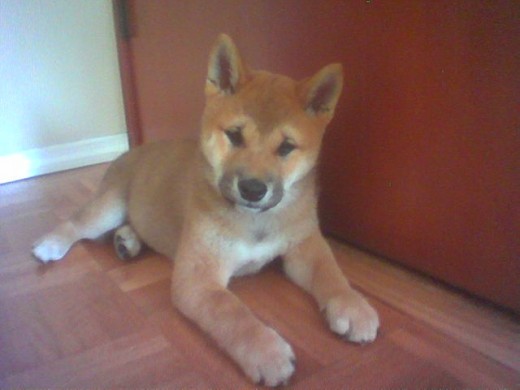
Some dog breeds such as the Shiba Inu, are naturally clean, and are relatively easy to house-break. My Shiba was potty trained when we first got him, at 10 weeks old.

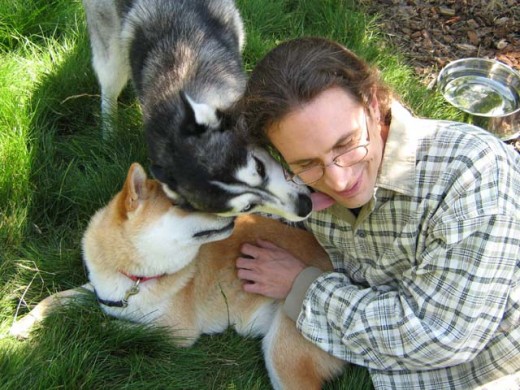
Shiba Inu Sephy does not even like to potty in our backyard. Instead, he prefers to wait until we go for a dog walk. In contrast, my second dog (a Siberian Husky) was more difficult to house-train because she did not mind frolicking close to her own waste products.

It took a few weeks to potty train her.

Puppy potty training also depends a lot on us. If we are naturally calm, consistent, and patient, house breaking will seem easier and require less work.

Whatever the case, always remember that we can successfully potty train a physically healthy dog, at whatever age, no matter the history.

And that is a dog potty training fact!

Puppy Potty Training 1

Set Up a Schedule


Puppy potty training begins by setting up a schedule. Initially, we want to bring our dog out often, and reduce the chances of her making mistakes inside the house.

When my Siberian Husky puppy was 8 weeks old, I took her out about once every hour (if she was awake), and after every 10-15 minutes of play.

I stop giving puppy water about 2-3 hours before sleep time, and take her out right before I crate her for the night. If I need to reward her during that time, I only use moist dog treats such as boiled chicken, so that she does not get thirsty from them.

FactDogs learn through a process called conditioning. They repeat behaviors that get them good results and stop behaviors that get them bad results.

The more we reward a puppy for pottying outside, the more she will potty outside. When my puppy does her business in the backyard, I mark that behavior (Yes!). Once puppy finishes, I treat her and give her some good affection. Afterward, I reward her with play-time or a brief walk.

The more a puppy practices pottying inside, on her own, the more she will just go in the house. After all, it is convenient and nobody is teaching her that it is inappropriate behavior.

What we want to do is not only maximize the number of successes, but also minimize the number of mistakes.

MythMy dog cannot be house trained because she comes from a stubborn breed, she is too stupid, she is too dominant, she doesn’t listen to me, she is too old, etc.

Any physically healthy dog can be house trained. The key to potty training is patience and consistency. Always be around to supervise our puppy when she is inside. If we do not have the time to supervise, then crate her, or put her in a long term enclosure with puppy pads.

Myth: Screaming and hitting the dog will show her that I am boss and make her stop pottying inside the house.

Screaming and hitting a dog does not work well, and usually makes things worse. How well do you learn when somebody is screaming at you, or hitting you? It is the same way for a dog, especially a puppy.

The fastest way to potty train our puppy, is to remain calm, and consistently let her know that going inside is inappropriate (Ack, ack), and going outside is appropriate (Yes).

Puppy Potty Training 2

Prevent Potty Mistakes

There are three ways to prevent mistakes inside the house:

a) Be there to supervise.

When our puppy shows signs that she has to go potty, take her outside right away. If we do not catch it on time and she starts to do her business, then interrupt her with a no-mark (Ack, ack), and take her outside.

MythI can potty train my puppy by rubbing her nose in it after the fact. She always looks sheepish and puts her head down when I shout at her. She knows she has done something wrong.

Dogs will only learn when we catch them in the act.

If we are not around and our dog makes a mistake, then we have missed a learning opportunity. All we can do is clean up the mess and move on. It is important to prevent mistakes by always supervising puppy, and using a crate or long-term enclosure when we are not around, or too busy to supervise.

Note that a dog may look sheepish when we shout at her after the fact. This is because she knows that we are upset. Therefore, she is using submissive gestures (e.g. putting her head down) to try and appease us.

The dog does not know what particular event has caused our anger, but just that we are angry. Shouting and rubbing a dog’s nose in her own waste does not teach her anything. All it does is confuse our dog, and cause her to get stressed and fearful. This can actually make things worse by causing her to do submissive urination.


b) Crate train our dog.

Dogs do not generally like to soil where they sleep. Keeping our puppy in a crate will discourage her from pottying because she does not want to soil her sleeping area.

When I got my first dog, I was a bit concerned about crating him. Here is what the Humane Society of the United States and the American Dog Trainer’s Network have to say about crate training

MythA crate will magically keep my dog from pottying for any period of time.

The crate is not some magical cure. A crate discourages a dog from pottying, but if a dog absolutely has to go, she has to go.

Keeping a puppy for too long in a crate, will force her to potty in the crate, possibly traumatize her, and greatly set back our potty training program.

The maximum crate time is dependent on the age of our puppy.

AgeMaximum time in crate
8–10 weeks30–60 minutes
11–14 weeks1–3 hours
15–16 weeks3–4 hours
17+ weeks4–5 hours

Maximum crate time from ASPCA Weekend Crate Training.

Note – this is just a general guideline for the maximum crate time. I usually take my puppy outside more frequently than that. I take her out as soon as she wakes up, and right after any heavy activity.

At night, I crate my dogs in the bedroom. Keeping our dogs with us in the bedroom will help with the bonding process, and show them that they are part of the pack.

When puppies are really young, they may not be able to hold their bladder throughout the night. It may be necessary to make an extra trip outside at night, or really early in the morning. Once they get a bit older though, this will no longer be necessary.


c) Put our dog in a long-term enclosure.

If we will be away for a long period of time, put puppy in a long-term enclosure. This can be a secure puppy pen, or a secure and safe room (e.g. kitchen).

Make sure there is nothing dangerous in the enclosure that our puppy can destroy and swallow. Put bedding, a water bowl, some puppy pads, safe chew toys, and safe food toys in the enclosure. Put the pads in a corner as far away from the bedding as possible.


Instead of puppy pads, we can also consider using an indoor grass system. However, some dogs may not like standing on or going on the indoor grass surface. Just using regular sod or grass does not work well because of drainage issues. The sod gets smelly very quickly because there isn’t anywhere for the pee to go.

When I tried using sod, I had to change it every other day, or my puppy refused to go onto it. This ended up being a lot more work than just using puppy pads.

MythWe cannot train a dog to potty outside, as well as potty on puppy pads. She will get confused and not know what to do.

Yes, it is true that if we can be around most of the time to supervise, it is better not to let a puppy do her business in the house at all.

However, if we will be away for long periods of time, if our dog has separation anxiety issues (which may cause her to need to go potty when we leave), or if there are other medical issues (surgery) that make frequent trips outside unfeasible, then it is perfectly fine to train a dog to both go potty on pads, as well as go potty outside.

Reward a puppy for going on his pads, and reward a puppy a lot more for going outside.

Puppy Potty Training 3

Clean Away Mistakes Properly

During the potty training process, there will be some mistakes. When that happens, calmly no-mark our puppy (Ack, ack), and take her outside.

Once we are outside, praise and reward puppy if she continues with her business.

Then leave puppy in the backyard, come in, and clean up the mess. Cleaning up messes in front of a puppy may sometimes cause her to mimic our behavior, and engage in eating her own poop. In her mind, she is only helping to clean out the den.

Use a cleaner that is made especially for pets. A popular pet odor cleaner is Nature’s Miracle.

Do not use ammonia based cleaners as the ammonia odor, which resembles urine, may attract our dog to urinate in the area.

Puppy Potty Training 4

Make Sure the Mistakes Are Potty Mistakes

Not all indoor urination is the result of potty training mistakes. Other reasons for indoor urination include:

  1. Submissive or excitement urination.
  2. Medical issues, e.g. urinary tract infection.
  3. Marking objects or territory.
  4. Stress or anxiety, which results from being alone, or other psychological issues.

Related Articles

Comments

  1. Hi,

    I have a 6 month old Siberian husky – Xena, and I am having a really difficult time potty training her. She can go 7 hours overnight without peeing in her crate but during the day when I am home and she is not in the crate she is constantly peeing all over the place. I live in an apartment building but have a huge concrete balcony. When the weather is nice I leave the door open at all times so that she can go outside on her own to relieve herself. This has reduced the number of accidents she has in the apartment. I, like other people that also mentioned it, have noticed that I can walk xena outside only to come home and have her pee in the house 5 minutes later. When we are home we actively supervise her at all times. When she has an accident she usually doesnt present any warning that she is going to pee. She just squats quickly and pees fast – not enough time for me to interrupt her and bring her outside. She has not pooped in the house but she does on the balcony – its not a habit i want to get into but its better than her going in the house. In addition, we live un nyc and xena pees and poops on concrete. She has never walked over to grass to eliminate. I was looking into the artificial grass area but im not sure she would use it. In addition, She just got over having a uti so I know that it is not a medical issue anymore. Please help!

    • shibashake says:

      Some things that helped with Lara during her potty training period -
      1. I try to anticipate when she is going to potty. For example, she will usually want to potty when she wakes up and after she plays with my other dogs, so I take her out as soon as she wakes up, and after about 10-15 minutes of play (depending on age). I also set up a consistent routine for her, and observe her routine so that I can better anticipate when she has to go.

      2. I go out with Lara and reward her very well for doing her potty outside. This is very important because it teaches her that potty outside = a lot of attention, games, treats, and more. I make sure to reinforce her potty outside behavior *every time*, so that she starts to associate the behavior with something really good. This will motivate her to go outside because pottying inside gets her no rewards, and she just gets taken outside.

      3. In potty training, I have found that consistency is very important. I take Lara outside when I think she needs to go, and reward her well. If she goes to the door and indicates that she needs to go, I also go outside with her and reward her well. If she makes a mistake, I always no-mark and take her outside anyway. She gets rewarded if she continues to go outside. If she does not, then we just come back in and there are no rewards.

      Another technique that some trainers suggest for potty training young puppies is to tether the puppy to us. In this way, the puppy is right there with us all of the time and we can quickly interrupt and take her outside if necessary. I have not tried this with any of my dogs though, and I am not sure how well it will work with an older puppy.

  2. Hello,

    I just got a 7 week old male shiba inu, I know that patience is needed but I am confused as to what I am doing wrong. I live in a condo and I have a very good sized balcony that I have one of the grass potty systems on. I will sit outside with him for up to 30 minutes and he will not go potty and then as soo as I let him insdie he will go to the bathroom on the carpet. Any suggestiong, I think he might not like the sounds outside since we live on a busy street. I need help please!

    Thank you
    NIcole

    • shibashake says:

      Yeah, Sephy is also very picky about his potty spot. He likes going on bushes, trees, posts, and such (vertical objects). He prefers to potty during walks, or in our front yard. He does not even really like going in our backyard.

      My guess is that Shiba pup does not like going on the artificial grass system. Does he go onto the artificial grass on his own to explore? One possible test is to bring the potty system inside to see if he will go on it. Some dogs don’t like the surface, some don’t like the smell, there may not be enough room to circle, etc.

      When he was at his breeder’s place, did he potty inside the house or outside? On regular grass or some other surface?

      I try to bring my puppy out when she is most likely to go (e.g. when she first wakes up, or after very rigorous play). In this way, she will very likely potty when I take her out, which means I can reward her really well and reinforce the behavior.

      I also try to minimize mistakes inside. As soon as she shows any potty signals (going into the corner or circling) I take her out right away. If I miss the signals and she starts to go, then I no-mark, interrupt her, and take her outside. She will usually continue when I take her out, so I can reward her well and further reinforce the behavior.

      In this way, she learns that -
      Potty outside = Lots of attention, treats, and a fun game,
      Potty inside = Get interrupted and taken outside.

  3. Jacob Pittas says:

    Hi,
    I just got my Siberian Husky Kona the other day and so far things are going as expected. I know there will be messes to clean up, and supervision and time is needed to train him. There is one thing that needs to be stopped asap though, and that’s whining/howling when he’s in his crate. It’s non stop and very loud and will go through the night. I have roommates that are very dog friendly and ok with me having Kona, but they need the howling to stop. It can be heard throughout the house. Do you have any suggestions? I can put him in the garage where he can be barley heard but that doesn’t seem like its solving the problem. I could also leave him in my own bedroom with everything out of reach and clean, but he’ll still whine/howl and it kind of defeats the purpose of having a crate for training. Any suggestions would be much appreciated.

    • shibashake says:

      Does he only vocalize when he is alone? Puppies often get anxious when they are left alone, especially in the beginning, because they have just been separated from their littermates, and are in a totally new and unfamiliar environment.

      When Lara was young, I put her puppy enclosure in the tv room, so that she can always see and be with people. Using a puppy enclosure in the beginning also helped, because then I had more time to train her to get used to her crate.

      Once we made good progress with crate training, I also tethered her for brief periods of time to her crate (only under supervision and only with a flat collar or harness). This was a useful intermediate step for us, because it gave her a bit more freedom, and got her used to calming down and resting around her crate area.

      Here is a bit more from the San Francisco SPCA on crate training.
      http://www.sfspca.org/sites/default/files/crating_0.pdf

  4. My 15 week shiba inu is still not house trained. (We got her at 8 weeks) she will go 4 days without an accident then 1 week with accidents all the time. My husband and I work 8 hour days and do not have consistent shifts ( although I was told I would before getting Maya). We try our best to keep her on a schedule but it seems to not work. We live in an apartment and I have read that it is hard to potty train a puppy in an apartment but I did not think it would be this tough. I do not have an enclosed area to “just take her out” we have to put on the leash, then walk down 2 flights of stairs to get her outside, so correcting the behaviour is hard. We have tried pee pads but she just destroys them. I have tried coming home on my lunch but it doesn’t seem to work either. Any suggestions?

    • shibashake says:

      Hello Stephanie,

      The only way I know of to effectively potty train a puppy is through supervision.

      With my puppy Lara, I am there to prevent mistakes and to quickly no-mark and take her to her potty spot when she makes a mistake inside the house. I reward her for going in her potty spot very very well, so that she learns -
      Going in her potty spot = Attention, rewards, play, and more,
      Going inside = No-mark, get interrupted, get taken outside.

      For a puppy to learn, we need to be there to teach her what to do, and what not to do. Here is a bit more on how dogs learn.

      When Shania was young, she had to go through leg surgery, so we kept her in an enclosure during the healing process. During that time, we trained her to go on puppy pads. I changed the pads as soon as she goes on it, and I am also there to supervise and train her not to play-bite on the pads. Puppy pads can be very helpful for situations where we are unable to go outside quickly or easily. However, supervision is still necessary.

      Some alternate possibilities for supervision-
      1. Hire a pet sitter.
      2. Get a friend, neighbor, or relative to drop by and help.
      3. Take some time off to train our puppy.

      Some people may also use dog-daycare, but that is only appropriate *after* our puppy is fully vaccinated. In a daycare, or other public kennel, our dog will be exposed to many other dogs, some of whom may be sick or contagious. Some daycare places may keep only puppies together, and check for vaccination records; but personally, it is not something that I would take a chance with.

      Some people may suggest using a plastic potty system that cannot be shredded. However, my Shiba is very particular about his potty ritual and he will not go on plastic potty systems. He is also a strong chewer, and has chewed up plastic objects before, which can be a health risk.

      When Sephy was a puppy, he was very energetic, mischievous, and full of curiosity. He needed a lot of structured activity, a consistent set of rules, training, and a lot of supervision.

  5. I have a teacup yorki and the house and crate training has been a nightmare. I was always told that dogs don’t like to be in their own “mess” or go to the bathroom where they sleep. But this little one has no problem being covered in it. Any suggestions? I feel like we have tried everything

    • shibashake says:

      I was always told that dogs don’t like to be in their own “mess” or go to the bathroom where they sleep.

      In general, I think that is true. However, some puppies (especially pet store puppies or puppy mill puppies) are kept by their breeders in cages for long periods of time in their youth. As a result they have no other choice but to eliminate where they eat and sleep. After a while, they get used to it and think it is what they are supposed to do.

      Since there is already a potty association with the crate, one possibility is to use a puppy enclosure/pen instead. I make sure the enclosure is safe, put puppy pads in the enclosure, and teach my puppy to go on the pads (if need be) when she is in there. When she is outside, I am always there to supervise, take her outside, and reward her very well for doing the right thing.

  6. i have had a siberian husky for about 6 weeks now he is 11 weeks old and i cannot house train him! He did very well around week 2 and 3 and now all of a sudden he is peeing in his crate and peeing and pooping in the house….we only use positive reinforcements treats and praise but he has just taken a major step in the wrong direction and we just dont know what to do. Please help.

    • Did something change recently that may have caused this change in behavior? Is he energetic and eating and drinking normally? Is his pee and poop normal? Has he been to the vet for an examination?

      Has anything else changed in terms of level of supervision, routine, exercise, etc.?

      What is his daily routine? When he pees and poops in the house, is he home alone?

      When there is a sudden change in behavior, there is usually something that triggers it. What has worked with my dogs, is to identify the source of that change, and help them overcome it.

  7. I just got a Shiba Inu three days ago, she(Mocha) is 3 months old and will be 4 months on January 3rd. I just found your website and I love it! I googled a lot about potty training and as advised, I bring her out after sleeping/a nap, eating and playing. She hasnt had any accidents today, a few yesterday but that was partially my fault since I think she was trying to tell me but I didn’t notice. I taught her sit but she only does it when I have my hands bunched up in front of her or if I have a treat holding it in the bunched up position(idk how to explain, sorry). She doesnt sit if I say sit while standing or sitting somewhere not having my hand in front of her. She automatically sits now when I have a treat, is that good? Also, when I bring her out now, she doesnt want to go in. Instead she sits there just looking around. She already peed but she still didnt go in, she used to go in after me but she didnt follow me in today so I just picked her up and went in while saying “Come in” totry and teach her to come in when I say that. Any advice on that? She also sleeps a lot, is that normal? And one last thing, she only goes out if I go out, any advice?
    Thank you! Help appreciated!

    • shibashake says:

      Congratulations on your new Shiba Inu puppy! She sounds like a very clever and sweet girl.

      In terms of commands, my dogs also learned the visual gestures first. I give them different hand signals for different commands. In the beginning, I repeat a command very frequently using visual gestures. Once they are doing well with a particular command, I add in the verbal and keep practicing. Then, I try just the verbal without the hand gesture.

      When I first did this with Lara, she was a bit confused. She did not really understand what I wanted because she learned the commands first using visual cues, which I believe is more natural for a dog. So I waited while she tried out different things and finally she got it. Sometimes, it was necessary to help her out with a slight hand gesture, but with enough consistency and repetition, she was able to learn the verbal cue in addition to the visual.

      In terms of “Coming In” or more generally, coming when called, this article from the ASPCA has a very nice list of recall training techniques-
      http://www.aspca.org/Pet-care/virtual-pet-behaviorist/dog-articles/teaching-your-dog-to-come-when-called

      She also sleeps a lot, is that normal?

      Hmmm, how many hours does she sleep? What is her regular routine like during the day? Does she have a good appetite? When I get a new puppy, I usually take her to the vet early-on to get a general check-up and set up a vaccination schedule.

      Big hugs to Mocha and Happy New Year!

  8. My fiancé bought me a shiba as an early Christmas present and he is adorable and very loving, however he is making me want to rip my hair out!! I was able to train him to poop outside very early on (thank god), but he pees everywhere- all the time! We’ve tried crate training him as well and that isn’t working either. I’ve tried rewarding him when he does go outside, the trouble is, when he comes back in..he pees what seems like every 5 min inside as well! He pees in his crate, he pees….pretty much everywhere. He’s got lots of energy so I don’t see him being sick in any way. I take him out when he wakes up all the time, every 1/2 hr to hr of being awake, after eating, before bed, once during night, and stop water 3 hrs before bed and only gets it every few hours during the day-what am I doing wrong? He was so easy to poop train!
    Helllllllllllllp

    • Hello Nikola,

      If puppy is peeing really frequently, then there could be a urinary issue. Is his pee clear or cloudy? When I get a new puppy, I find that it is really helpful to take her into the vet right away, for a general check-up and to setup a vaccination schedule.

      With Husky puppy Lara, she usually needs to go when she wakes up and also after any kind of play or exciting activity. At most, we do 10 mminutes of play then I take her out. Other than that, supervision is key. I try to look out for her “pee signals” – e.g. circling, going to corners. When she starts doing any of these things, I take her out right away.

      If I am too slow, then I calmly no-mark, interrupt her, and take her out for her to finish outside. I praise her very well when she continues outside and reward her with very high priority food (something that she only gets during potty training) and a very fun game. We stay outside for a while, and then I check if she needs to potty again before we come in.

      If I am too busy to supervise, I put Lara in her enclosure with puppy pads and bedding.

      Supervision is probably the most important thing in potty training. If I am there to catch her every time, I can limit the number of mistakes, and maximize reinforcing her for doing the right thing.

  9. I got my Shiba Inu when he was 3 months old. he is now 8 months, and absolutely refuses to go outside. I don’t understand why, at the start he always went outside to use the bathroom, and now he fights me to put on his harness, and fights me outside b/c he does not want to walk or use the bathroom. I’m a bit worried, I don’t know what to do.

    • When did this start? Did it coincide with changes in the weather outside – e.g. getting more rain? Sephy does not like going outside when it is too wet. He also does not like doing his business too close to the house, so we usually walk a bit before he will do his business. Trees and bushes are his favorite spots.

      We use a collar with Sephy because in general, he does not like having anything on his royal Shiba body. The collar is the least amount of material, but even so, we desensitized him to it carefully.

      How is your Shiba’s energy level while in the house? Have there been other changes? Does he like going out into the backyard or not at all?

  10. Ok, a few questions. My Sibe Luna will sleep in the crate all night, whining only a bit when first put into it. However, she pooped in the kitchen at one point, so I crated her to clean it up (didn’t scold her). She went nuts. She was digging at the plastic floor, biting the bars, pawing at everything. Even when I sat there with her, she was panting and wearing herself out… do you ignore the outburst at that point until they calm down?

    Also, even though we have her sleep there at night, she never goes in on her own. She doesn’t look in it, doesn’t explore it, and never sleeps there during the day. I can understand her sleeping in the study where I am, but sometimes she’ll go into the bedroom and just sleep on anything else. One morning we weren’t ready to get up, but she was, so we just shut the bedroom door and kept her in with us. She slept on a pile of clothes. When we were worried about our jeans and stuff, we moved the clothes, but she still didn’t go to the crate. My husband lay a sweatshirt down for her, and she’ll go sleep on that sometimes. So basically, she doesn’t seem to see it as any sort of sanctuary.

    Also, I think it may be too big… do we need to replace it?

    You talk about scheduled crate time. How do you schedule it? Do you leave any toys in there? Just chew toys?

    • Interesting. The crate thing happened with Shania as well. She pooped on her bedding in her enclosure, so I put her in the crate and proceeded to clean up the mess on her bedding. She went nuts in the crate and pooped there again.

      I think she sensed my energy – that I was stressed, frustrated, and unhappy. In addition, she probably didn’t get all the stuff out the first time. My guess is that the flurry of activity (getting her out of the enclosure without her stepping on the poop), combined with my unstable energy, combined with the sudden confinement, got her really stressed out. All my dogs are very good at picking up on my energy even when I don’t say anything. After that, I never used the crate again in that circumstance.

      If she makes a mistake inside, I try to stay very very calm, interrupt her, and take her outside. If that is not possible, I also have a secondary smaller enclosure with puppy pads but no bedding. I put her in there, and then I clean up the mess. That seemed to work well for Shania.

      do you ignore the outburst at that point until they calm down?

      In Shania’s case, I let her out right away. This is because-

      1. Her behavior came from stress and not from anything else.
      2. The confinement was contributing to her stress, and making it worse.
      3. I want her to always associate the crate with positive events.

      Context is very important in dog training. The general wisdom is that we should not reward undesirable behaviors, so if our dog whines to demand attention, we should ignore her until she calms down.

      However, in Shania’s case, her frantic behavior was borne out of stress, and the confinement was exacerbating the situation.

      One important lesson I learned, during my difficult Shiba days, was to be flexible. I carefully look at Sephy’s body language to try and understand where he is coming from, and I try to take everything into account. I do what I think is right given the surrounding context, and given what Sephy is saying to me. I try to follow the spirit of the law, rather than the letter of the law.

      In terms of crate training, I go slowly during training and I pair it with positive rewards including food, attention, and relaxation.
      http://shibashake.hubpages.com/_srec/hub/Dog-Anxiety-Fearful-Dog#mod_15989164

      I usually let my dogs work on frozen Kongs while in their crate. Sometimes they work on chicken stuffed chew toys. I only use *very safe* chew toys. Some dogs can tear chunks out of toys, and these chunks can become a choking hazard.

      When Lara was young, we would have about 2 hours of activity, training, and working on food toys, then nap time and repeat. Each dog is different though, so I set-up Lara’s schedule based on her activity level at the time. At night, Lara would sleep for a longer period of time, maybe about 6 hours. Then she wakes up and needs to go out. After she got a bit older, she slept through the night.

    • Frozen kongs, never thought of that! I’ll give it a try!

  11. Mack "The Truck"'s Mom says:

    Great advice on potty training – THANK YOU. We have a new rescue dog in our home. While he is beyond precious…we are struggling with the potty training. As he was a breeder rescue, his previous life was confined to a very small crate where he slept and poor guy also had to go to the restroom. As such we are having some challenges with him going in his cage.

    We would love some tips on this.

    • Hmmm, one possibility is to use an enclosure instead of a crate when we are not around to supervise. I used an enclosure with Shania after her operation so that she didn’t have to go out every time she needs to potty. In that way, our dog can go on potty pads, and at the same time does not get into the habit of soiling in the crate.

      After the dog is potty trained, we can slowly reintroduce the crate and help him associate it with positive outcomes.

  12. Hi, ShibaShake! I was wondering if I could have a little bit of advice.

    So, I’m 12 years old. Plain and simple. My stepfather is a traditional (stick) trainer, and will yell at me for not keeping Shiloh from messing in the house. He will tell me to swat her, shove her muzzle in the feces/urine, and shout at her. We brought her home on Sunday, October 28th, and it’s only been a couple of days. Both he and my mother actually yell at me for not fixing it.
    Shiloh is a 5 and 1/2 month old black and white ticked German Shorthaired Pointer puppy, and for her whole life, she has lived in an outdoor kennel. Today, she was doing good, we thought she was learning her house training, but then she urinated 3 times within at least 2 hours. We leave water out for her access at all times, but she doesn’t drink it very often.
    Even though I tell my stepfather not to hit her (she’s my dog), he still does, and yells at me. He says positive reinforcement is dumb and you ‘always need treats’, and we often go round and round in our arguments. My mom, being a non-animal person that knows nothing about training, just screams at me. What do I do? I don’t want to involve physical negativity, and my mother and stepfather both won’t buy me a tether for her, or treats, so I have no way to work with her. Is there any other way? Please help.

    • shibashake says:

      Actually, what I found to be most important in potty training my dogs is supervision. During the training period, I keep puppy close to me and watch her closely. In this way, when it looks like she is about to make a mistake, I interrupt her and take her outside.

      I take her to her potty spot, and say “Go Potty”. If she does, I praise her very well, give her attention, and also play a really fun game with her. There are many types of rewards we can use to motivate our dogs, and treats is just one of them. We can also use attention, fun games, and also the dog’s regular food. In fact, rather than giving my dogs free food in a bowl, I make them work for all of their food. This is good exercise for them, helps them redirect their energies into positive activities, and teaches them a good work ethic. This is also called the Nothing in Life is Free program.

      With close supervision, I am able to maximize the number of successes that end with a reward, and minimize the number of mistakes. Also, I clean up all the messes, so nobody else needs to get involved if they don’t want to.

      Here is a bit more on what I do to train my Sibe puppies.

  13. We just got 2 Shiba Inu Males – 8 weeks old. They have not yet been crated in the 4 days we had have them. They use our uncarpeted downstairs and their crate is open at nights. Should we shut the crate tonight?? They sure do whimper a lot during the night. They do not understand about potty yet. We try and reward with treats. Any ideas for the little guys?

    • shibashake says:

      Hello Morgan,

      When Sephy was a puppy, we kept him in his crate, but had the crate in our bedroom so that he could be with everyone. That worked out pretty well, and if he needs to go potty during the night, we will know and can take him out.

      Some other things that helped-
      1. We stopped giving him water a few hours before bed.
      2. We got him to go potty one more time right before bed.
      3. If we need to give him treats then, we would only use wet treats so he does not get thirsty.

      Still, young puppies have small bladders and may still need potty breaks during the night. When Sephy needed to do that, we would take him out on-lead, go to his potty spot, and give the “Go Potty” command. If he goes, then I make a big deal of it and reward him really well for letting me know he has to go, and then for pottying in the right place.

      Otherwise, I would wait about 10 minutes or so. If he doesn’t go, we come back in and he goes back into his crate.

      I also did a lot of crate training exercises during the day with Sephy so that he would get used to it and learn to associate it with positive experiences.

  14. I have a new 4 month old siberian husky named bolt. He is very energetic and smart with my training. But i really have trouble with teaching him how to potty. The previous owner only put him in a cage and never lets him outside, so he never learn how to housebreak. He often poops on the floor, its his favorite spot. I even took him for a walk in the morning and he still doesnt poop until we enter the house. I caught him right in act sometimes and immediately make him smell his poop and punish him with my high NO voice. I have only been with him for 3 days but im wondering have i been doing the right thing? Will this work?

    • I always leave him in the cage whenever i leave. I only let him out when i take him to walk and play

    • shibashake says:

      What seems to work for my Sibes-
      1. When Sibe puppy makes a mistake, I calmly no-mark her (say Ack-ack) so that she knows it is an undesirable behavior.
      2. Then I interrupt her and take her outside calmly.
      3. Usually she will continue with her business outside, so I reward her very well with food and a very fun game.
      4. I come in alone and clean up the mess.

      In this way, she learns that doing her potty outside = lots of rewards, while doing her potty inside just means she gets interrupted and taken outside. She quickly got very motivated to let me know when she needed to go.

      Other things that help with potty training my Sibes-
      1. Putting them on a fixed schedule.
      2. Close supervision. We want to be there to consistently prevent mistakes, and maximize successes.

      I describe more of what I did in the article above.

  15. Should Use Cage For 8 week Lab Puppy ?

    • shibashake says:

      It depends on how we go about crate training the puppy. I always go slowly and make training sessions positive and rewarding. In this way, my dogs associate their crate with a calm, safe place, that they can go to to eat and rest.

      More on crate training.

      However, as with anything else, mistakes can occur or equipment can be misused.

      Problems can arise when we force our dog to stay in the crate (e.g. for punishment) or keep a puppy in there for overly long periods of time. Sometimes, dogs are only crated when nobody is home, which causes them to associate crate time with being alone. All of these things can create negative associations with the crate, that can then lead to stress, anxiety, and fear.

  16. Hi, my family just recently got a 4 month old puppy from some friends that had to move, his name is Bolt and he is a white husky, and we knew it would be hard for us to train him because he was with the other family for 2 months and they had not taken very good care of potty training him. We are following your advice and he like to potty in the living room and in front of the bathroom and will go to the bathroom as soon as 15 minutes or more after he has already gone…what should we do? and is it okay to cage him for punishment? ,Thanks so much

    • Congratulations on your new puppy!

      When I catch my Sibe puppy making a mistake, I just calmly no-mark her (Ack-ack), interrupt her, and bring her outside. If she continues to do her business outside, I praise her very well, and reward her with treats, and a very fun game. Then, I come back in (alone) and clean up the mess.

      In terms of potty frequency, young puppies may have to go more often because their bladders are not fully developed. My Sibe puppy also needed to go more frequently after she does some rigorous activity, e.g. play, run around, walks, etc. How often does Bolt need to potty? Has he been to the vet for a checkup and vaccination shots?

      As for the crate/cage, I generally only want my dog to associate it with positive experiences. This makes her like going into her crate, which she does at night and sometimes during the day to eat. The crate is her safe and peaceful spot where she goes to sleep, rest, and sometimes eat while thinking great thoughts. :D

      For timeouts, I put my dog briefly in the laundry room. But only for more serious offenses.

  17. I’m getting a shichon puppy in about 2 weeks and I’m trying to get prepared for him. I have 2 small children and want to avoid any accidents in the house if possible. What is the best way to go about this? Thanks in advance for your help.

    • Congratulations on your upcoming new puppy.

      As for potty training, I think the most important aspect is supervision. When Lara was a puppy, she was doing so well with her potty lessons that I slacked off on the supervision slightly (e.g. go on brief bathroom breaks without putting her in her enclosure). As soon as I started relaxing things, she started making lots of mistakes.

      After this, I made sure to always put her in her enclosure even if I will only be gone for 30 seconds. Puppy can do lots in 30 seconds. :D

  18. kevin stewart says:

    My 12 week old male husky, when placed in an enclosure with training pads… tends to tear up the pad during the day… How can I teach/keep him from doing this??

    • shibashake says:

      With Lara, I first started training her to stay in the enclosure when I am home and can supervise. When she starts to get restless and goes to bite her pads, I would no-mark and then get her to chew on her toys instead. If she keeps going back to the pad, then I just put her in the backyard, and she doesn’t get to be with people or my other dogs for a while.

      Other things that seem to help-
      1. I used a pad holder so that the pad stays in one place. Motion often gets a puppy excited, and she will want to pounce and chase it.
      2. I make sure she is very well exercised before I leave.
      3. I give her many safe chew toys to play with. She got a lot of frozen kongs during puppyhood.

      Another possibility is to use something less-chewable. With Shania, I tried using sod but ran into drainage issues. Some people have success with those artificial-grass potty systems. However, I have not tried using them, so I do not know how well they work.

  19. Hi ShibaShake,

    Thank you for your informative articles. I am thinking about adopting a Shiba from a local rescue – about 2 years old. The foster home says that it has been housebroken and will wait for 8-9 hours before going potty. I don’t think this is acceptable and plan on bringing it out every 3-4 hours for potty.

    However, I am also wondering if I could train the Shiba to use my toilet or go in my bathtub (I am thinking of building steps for it to go). I would like to teach my Shiba to go in my bathtub as and when it wants. If so, who can I talk to or where can I read up on it? I would like to figure out how to use positive reinforcement to teach it that technique.

    I am not asking out of laziness – I still plan on bringing my Shiba out 3-4 times a day. I simply think it’s unphysiological to make my Shiba hold it in while I am not at home.

    Thank you.

    -Jonathan

    • shibashake says:

      With Sephy, he is very particular about where he does his business. He most prefers to go during his walks and will usually even disdain using the backyard. Even when he goes outside, he picks special spots that presumably have the right set of smells. He only goes in the backyard when he absolutely needs to.

      The bathtub has a slippery and cold surface that dogs often do not like. My dogs may smell the tub but they do not willingly go in there on their own.

      Sephy has free access to the backyard whenever he wants. He may sometimes go outside to sun himself, but he does not pee in there very often (his choice). When you gotta go, you gotta go, but when you don’t gotta go, then you don’t gotta go. :D

  20. My shiba inu is 9 months old. I was wondering if you have any advice on how to get him to go to the bathroom in our yard. Right now, he will only go if we take him for a walk.

    • shibashake says:

      Yeah, Sephy is the same way. I think it is a pretty common Shiba trait.

      When he really has to go though, he will go in the backyard, so I don’t think any harm comes from it. I just walk him daily and make sure he has many chances to relieve himself. :D

  21. Anonymous says:

    Hi Shibashake,

    We took our 19week shiba puppy to our basement where she loves to play. She hasn’t had an accident for a while and always let’s us know if she has to go pee. When she layed down on the floor to chew on her chew toy, she peed while laying down! It just didn’t seem right and we would like to know what to do.

  22. I have two Boston Terriers and we successfully potty trained both dogs, or so we thought. Duke our older dog(7yrs.old)almost never pooped or peed in the house even during almost 6 hour periods during the school/work day and during the night. Edward who we got when Duke was about four we potty-trained and had luck! After about a year we felt we could trust him to stay out of the crate during the school/work day. He did good some days and bad others but nothing crazy. Duke had diaherra(excuse my spelling) and had to go back to the crate, he never acted sick and ate regularly. So just before we were about to take him to the vet he pooped regularly in the yard again! Ever since that both dogs have been acting like we’ve never potty-trained them in the first place! We are having our carpets cleaned today I think that will help. I have no idea what happened can you help me please??
    -desperate dog lover

    • shibashake says:

      Hello Peyton,

      1. Diarrhea

      When my dogs have diarrhea, they often have a hard time holding it in. I let them out more often and sometimes, they may also need to go out at night. Recently, my younger Sibe Lara got giardia, which gave her bad diarrhea. She was still eating well and energetic, but she had to go out very often to do her business.

      The vet gave us pills and some powdered medicine to give her, and we also switched her over to a bland diet. She got better after a couple of weeks.

      In general, I find that when my dogs have diarrhea, switching over to a bland diet really helps.

      2. Potty training

      Hmmm, I am not sure I understand the timeline. It sounds like Duke’s diarrhea had already cleared up on its own? And then after that he started doing his business in the house frequently? Is his diarrhea totally gone? Did he visit with the vet? Is he on medication? Did the potty mistakes happen only after the vet? Did something else happen during the time of the potty mistakes?

      Usually when I potty train my dogs I supervise them closely until they fully stop going inside the house. Once they have no potty mistakes for about two weeks, I feel better about relaxing the level of supervision.

      Consistency and supervision are very important during the potty training period. If a dog can sometimes go on his own inside the house, then he may not know that we only want him to do his business in the backyard.

  23. I have a chihuahua that might be mixed with another, unknown small dog breed. He’s a super sweet dog and he’s somewhere between 1 year and 18 months old. We live in an apartment and I’m getting ready to start working 2nd shift and my husband works 3rd shift so he sleeps while I work and I sleep while he works. Unfortunately, that means our puppy will have to be kept indoors during my second shift, which will be from about 2pm till about 11 pm. We have one of those training mats that have a compartment that catches the urine and a grassy mat on top. Our dog won’t use the bathroom on it. I tried getting some of that spray that’s supposed to help but it only makes him want to lay on it, not pee on it. I want to be able to put him in the kitchen while I’m at work so that he has some space to run around and play but I need to get him to use his mat. Any suggestions?

    • shibashake says:

      Hello Tara,

      He probably does not know that he is supposed to go on the training mat. It may help to go back to basics and supervise him when you are home to go on the mat (while he is in the enclosure). With Shania I just no-mark her when it looks like she is about to go on the floor and put her on the potty pads.

      Another thing I have observed is that Shania will happily go on clean pads but she does not go on them once they are soiled. My guess is that she does not like going on an area that smells strongly like her own urine. When she had to spend time in her enclosure, I made sure to always provide her with clean pads and to change them frequently.

      Hope this helps and big hugs to your Chi!

  24. My friend made a very selfish decision to get a cavipoo while living in a crowded 2 bedroom apartment which does not allow pets. She has not been committed to being a dog owner from day 1, so I started puppy sitting her when she was about 4 weeks old. Now I have her about 5 days/nights a week and then she goes home to the apartment. She is 7 months old now and is still struggling with going potty solely outside at my house. It is extremely frustrating because everything I teach her gets forgotten as soon as she leaves.

    When she first started coming over I used the puppy pads more and than going outside, but now that she is here so much I’m really trying to get her to go solely outside while she is here. She is getting it most of the time, but once in awhile she will still use her pad or even go in some random spot throughout the house.

    Should I stop putting out the puppy pads while she is here-even when she has been gone for a couple of days? Should I retrain her by using the crate?

    It is very frustrating for both myself and the puppy. The same thing applies for jumping up on people, barking, biting, digging, coming when called, and any of the tricks I’ve taught her. Once she comes back from the apartment she is back at square one.

    Help!

    • shibashake says:

      Hello Erica,

      It may be best to have a friendly chat with the owner and convince her to follow the same routine and training. As you have already observed, consistency in training is very important. If puppy is allowed to jump on people sometimes and not on others, then puppy will learn to try jumping first, because this may be one of those times where she is allowed to jump. The same is true for other behaviors.

      If the rules keep changing, puppy will get confused as to what the rules are. With my Shiba puppy, I learned that consistency and a fixed routine were both very helpful in getting him to stay calm, building his confidence, and lowering his level of stress.

  25. Hi, I have a 9 month old shepherd Rottweiler mix pup who’s very much potty trained when we are home, he won’t go no matter what, I only know because I’ve slacked a few days when I’ve had the flu and he’s gone all night and well into the afternoon without pottying and just laying in bed with me. But if we aren’t home(we always take him out before we leave) even for an hour, he has an accident. We were crating him, but he is very destructive and would chew and break the metal bars and plastic ones don’t stand a chance. Leaving him in a safe spot doesn’t work because he gnaws on door frames or anything close by. He gets at least an hour walk a day and has plenty of chew toys…I’ve left potty pads and came home to them chewed up and pee on our rug…it’s becoming quite frustrating and I’m not sure how to fix the problem.

    • shibashake says:

      Hello Jamie,

      It sounds like it could be a separation anxiety issue. Some dogs may get very stressed when left alone, which may cause them to escape from crates, even to the point of hurting themselves. Stress from separation anxiety may also cause potty mistakes, chewing on furniture and walls, etc.

      Here is more on Separation Anxiety

      Here is a more general article on Dog Anxiety Problems

  26. hi um i am going to get a siberian husky soon but i have a problem i waited till summer so i could train the pup and i am going to creat train her. but when school starts again i dont know how it will work. i was thinking to get it when ts nine months old so by the time school starts it can stay in the creat for twelve hours.but i have also have two cats one may be fine with the pup but the other my be to scared and i wanted to get the pup small so the scared cat would get used to te pup before it got really big but if i get her nine months old will she be to big to introduce to my ant’s two cats? my sister also has a siberian husky and when she showed the husky to the cat it kind of scard the cat ithink y sidters dog was oneyears old.if nine months is to big what are some things i can do to make the cat not scared of the pup and make sure the pup is jentl with both cats?

    • shibashake says:

      Hello Marisol,

      I have two Siberian Huskies, Shania and Lara. They both have very high prey drive and will go after cats. They also spend a lot of time hunting for gophers and mice in my backyard.

      Based on what I have read, Sibes can be trained to live with house cats but because of their high prey drive, that may be more challenging and may take a lot more patience and time. I don’t have any cats myself, so I don’t have first hand knowledge in this area. However, I always liked this post on cat training-
      http://www.shibainuforum.org/forum/discussion/7120/problem-with-cats/p1#Comment_125511

      As for time in crate for potty training, that only applies to young puppies. However, Siberian Huskies are very active and energetic dogs. My Sibes are always on the go, and need a lot of structured activity throughout the day. Otherwise, they will try to escape or create their own activities, that will likely lead to property damage and who knows what else. :D

      More about Siberian Huskies.

      http://www.rescueeverydog.org/husky_breed.html

  27. Carolina says:

    Hi, I have a 4 year old male Lab and I have PERFECTLY trained him to ONLY go to the bathroom outside. I did this by taking him out every 2 hours and praising praising praising when he went (in the begining I would even have to go at 4am, 6am, UGH, and just walk walk walk until he went – I never gave up on that). Today he can (has to only in an emergency situation where I just CAN’T take him out) hold for almost a whole day (again, this rarely is the situation).
    Oh well, so now I am about to get a chihuahua. I would like her to go on a weewee pad now that she is very young and can’t really go outside, and later be able to go on a weewee pad AND ALSO OUTSIDE. Do dogs do well with this kind of thing? To be ok to go “in the house” but on a weewee pad, and know to hold to go outside too?

    I take my lab out for long walks to go the bathroom, raining or sunny, 3 to 4 times a day. Would a chi work on this schedule too? That is why I worry about the dual training. I am not a fan of pads =/ It seems to make the training a bit more complicated to have them go in only two places – pads or outside. Any easy to understand tips, please? =)
    Thanks!!

    • shibashake says:

      Hello Carolina,

      In general, I think it is easier to train a dog to not potty in the house and just potty outside. However, sometimes, we may not be around or it may be unfeasible to take a puppy outside frequently. For example, when Shania was young, she had to go through a series of surgeries. When she was recovering, we had to keep her activity level very low, so we mostly spent time with her in an enclosure that had bedding and potty pads. We put the potty pads in the corner, far away from the bedding. She was fine going on the potty pads, and we praised her for going on them.

      Once she recovered, she preferred to go outside because when she does her business outside she gets praised, special treats, and a really fun game. Since it is much much more rewarding to go outside, she quickly learned to go to the door whenever she needs to go.

      In terms of frequency and length of walks it depends on the energy level of the dog. For example, many Terriers may be small in size, but they usually have a lot of energy. I usually walk puppy separately first. That is helpful for leash training and also to gauge the energy and comfort level of the puppy. I only walk my dogs together if they have about the same energy level and are comfortable walking at around the same pace. For example, I walk Shania separately from my other dogs. She is a three legged dog and gets tired more frequently, so we have a lot more rest breaks.

  28. Hello ShibaShake! I came across your website while looking for potty training tips for my new puppy. He’s a Havanese and 9 weeks old. I’ve been potty training him for about a week now. He is very good about using the potty pads when I restrict his play area to tile. However whenever he encounters a rug he gets very confused and pees. My questions are as follows:

    Is it possible to have rugs while training a puppy with pee pads? I’ve read that puppies can’t tell the difference between the two. I’ve also read about people getting frustrated and going so far as to get rid of all the rugs in their home.

    Will using a pee pad holder help? Will a pee pad in a holder feel different than a rug?

    Finally, how can I correct my puppy’s offending behavior? I always praise him when he goes potty on the pad. But I can never tell when he’s gone potty on the rug until after he’s walked away. My puppy is very obvious when he wants to go poop. He circles around and does this squat walk. But I can never tell when he’s going to pee! He doesn’t sniff. He doesn’t lift his leg. Sometimes he pees in the middle of walking. Sometimes he pees while stretching.

    Any advice you could give me would be a great help!

    Thanks, and I love your site!

    • shibashake says:

      Hello Habago,

      Is it possible to have rugs while training a puppy with pee pads? I’ve read that puppies can’t tell the difference between the two.

      Hmmm, that is interesting but not something I have observed with my dogs. While Husky Shania was recovering from her leg surgeries, I mostly kept her inside the house. She was mostly in her enclosure area with bedding and puppy pads, but she did not really show any interest in going on the carpets or rugs in the house. My other puppy Lara also had access to puppy pads while in the house. She would sometimes make mistakes on the carpet, but in her case, it was simply a potty mistake and not confusion about pad vs. carpet. She would sometimes make mistakes on the tile floor as well. After I fully potty trained her, she stopped going in the house.

      At this point perhaps puppy has learned that going on tile is not ok, but still does not understand about carpets? It could also be that puppy got accustomed to going on carpets in his old home.

      Another possibility is that there may still be some left over smell from previous mistakes, which may encourage a dog to treat the area as a potty spot.

      Finally, how can I correct my puppy’s offending behavior? I always praise him when he goes potty on the pad.

      What has worked with my dogs is to reward really really well for the right behavior, especially in the beginning. When they potty outside, I praise, treat with something special that they only get for doing a good potty, and play their favorite game with them. In this way, they are highly motivated to potty outside.

      As for stopping the behavior inside, we usually want to catch them in the act or as close to it as possible. I would keep observing puppy closely to see what his tells are
      - Is there a specific area that he favors? During puppyhood my Sibes would pee close to the wall, so when they go sniffing at the edges, I take them out right away.
      - Is his body language different when he is about to go? Does he put his head down, take his tail up, is his posture different?
      - Does he usually stretch before peeing?

  29. Jennifer says:

    Hello,
    We adpoted a beautiful 4 month old german shepard mix about 5 months ago. She quickly learned to go on the potty pads and has had barely any issues with pottying anywhere but her pads. Now that she is older and can hold her waste longer, I want to train her to go outside. We live in a condiminum and either my husband and I are home all the time so we usually take her outside if we see she looks like she is about to go potty on her pads. Once outside though, she sniffs around and looks like she is about to go but never does. We’ve been outside with her for hours at a time waiting for her to go but nothing. Our 8 year old Beagle knows how to cry at the door to go out and Bailey (german-shepard mix) has caught on to this but hasn’t caught on to actually going outside. This evening she has peed on our bed as well as our couch and I think it is because of all of the changes of going outside has stressed her out? I do not know what to do. Please HELP!!!!!!
    Sincerely,
    Desperate Doggy Owner

    • shibashake says:

      Hello Jennifer,

      She may think that she is only allowed to go on potty pads, and not on grass. With my dogs, I have also noticed that they prefer to go on grass, which is the surface that I initially potty trained them on.

      Some things that may help-
      1. Associate a verbal command with the potty action.

      Initially, I associate the “Go Potty” command with the potty action. When I am pretty sure that my puppy is about to do her business, I say “Go Potty”, then I reward her especially well for doing it “on command”. I keep repeating this every time she does her business. This helps her associate the verbal with the action, so that I can later use it to communicate with her and let her know that now is a good time to potty, or this is a good spot to go potty.

      2. Put a potty pad on the grass.

      As a transition step, putting a potty pad on the grass may help her learn that it is ok to do her business on grass. I always make sure to reward really well when puppy potties in the right place. I give her affection, food, and also play a very fun game with her.

      3. Long walks or exercise.

      I have noticed that my dogs are more likely to potty after some rigorous exercise, e.g.long walks, or high energy play sessions.

      It can sometimes be difficult, but I also try to be relaxed when puppy makes mistakes in the house. Dogs are usually very sensitive to their people’s energy or emotional state. When I am stressed or angry, my dogs pick up on that right away and often get stressed themselves. As you say, this can cause them to make even more mistakes.

      Big hugs to Bailey. She sounds like a wonderful girl.

  30. HI :)
    this site is very useful ! :) and your dogs are very adorable !

    i recently bought a 2 month old beagle, her name is Yuri.. (btw, its my first time to take care of a dog)
    we live in a condominium so we decided to let her do her thing is a small tray we provided for her.. sometimes, pees and poops on it, but most of the time, she poops anywhere… if we suspect she’s about to poop, we put newspaper right away…

    my main problem is this.. during the night, we leave her outside our room, Yuri would not sleep unless there’s someone beside her, so I always sit beside until she sleeps, most of the time, I rub her belly to make her sleep… or carry her like a baby until she fell asleep…is this normal for a puppy?
    i had been doing this for a week
    to make things worse, whenever she poops in the middle of the night, she would scratch our bedroom door and bark to wake me up to clean her pee and poop, she would not stop until its cleaned… usually she poops at 12pm, 1am, 4am… *i am already tired but i have no choice…

    we tried to put her in her cage but she keeps barking and howling… i am worried that the neighbors might complain so i did not continue with this method…

    HELP!! i am very tired :| and frustrated…

    i will take her outside when she’s old enough, the vet advised me not to take her outside yet because she might acquire bacteria, viruses etc…..

    ***your reply would be a big help .. THANKS A LOT :)

    -selina

    • shibashake says:

      Hello Selina,

      In terms of potty training, I train my dogs to only potty right on their pads. If they get used to pottying wherever in the house, then it will be more difficult to potty train them later.

      With my Sibe puppy Lara, I set up some puppy pads in her long-term enclosure. In this way, she has some place to go when I am not around to supervise. I make sure to praise her and reward her for going on her pads. If she tries to go anywhere else, I no-mark her and take her to her sanctioned potty area. If she continues, then I praise her and reward her.

      In terms of sleeping, my dogs sleep with me in the bedroom in their crates. With puppy Lara, I slept with her for the first couple of days, then I slowly desensitized her to her crate.
      http://shibashake.hubpages.com/hub/Dog-Anxiety-Fearful-Dog#mod_15989164

      It is natural for puppies to whine and cry when they are not getting their way. I make sure not to reward this behavior though, because if I do, puppy will just keep repeating it. I always wait for them to be quiet before giving them anything, including my attention.

      I also make my dogs work for all the things that they want, including food, toys, access to the backyard, and also for tummy rubs! :D I do this by following the Nothing in Life is Free program.

      Here are a few more things that helped with my dogs during puppyhood-
      http://shibashake.com/dog/puppy-obedience-training
      http://shibashake.com/dog/how-i-trained-my-husky-puppy

      Hugs to Yuri!

  31. Hi Shiba, thanks for your reply.
    Yes, that is very unusual! Well…answering your questions…maybe we can figure it out!

    Did she do her business after you got home and took her out? Yes she does…but she is not doing it on her pad…she does it specially when we’re not around her…or not looking at her…and she does it on the floor, she pees a lot then because she held all day! But when we take her outside she pees and poops too…I think she likes outside…but we were not taking her outside because she still doesn’t have all shots and we live on the 34th floor! That’s why we wanted her to use the pad….but now that she is holding it…maybe it’s better to just start taking her outside?
    But when we leave her alone in the kitchen all day…there is a pad there and she used to do her business there (both) but now when I get home the pad is clean…there is no signs of pee….

    How is her appetite? Does she drink water regularly? Does she have water and food in the kitchen during the day? How is her energy level?
    We feed her twice a day, 06h45am and 06h45pm. While we are gone for work we just leave a kong in the kitchen with some food so that she can play and also eat during the day…she drinks a lot of water too. She is full of energy and loves to run in the house!

    It could be a health issue, in which case it would be best to take her to the vet for a checkup.

    Did something change 10 days ago?
    Well I think we didn’t established a routine…on the weekends when we’re home we don’t wake up so early and she realizes that we’re home…from Mon to Fri she is all by herself…could it be an issue?

    Did she eat something she shouldn’t have? Sometimes…pieces of paper or anything she finds on the floor…we always try to keep the floor clean.

    Were there any schedule changes? Yes…a lot…specially on the weekends…

    Were there changes to the location of the pads and type of pads used? No…not change at all.

    Any food changes? Same food

    Are there any other behavioral changes? Yes…I think she is kind of…scared of us sometimes…not sure….I think she was feeling so pressured to pee on the pad that she started to hold it….I don’t know :(

    What do you think?
    Thanks again!!!
    Larissa

    • shibashake says:

      Hello Larissa,

      It is difficult to say for sure from just online communication.

      Yes…I think she is kind of…scared of us sometimes…not sure….I think she was feeling so pressured to pee on the pad that she started to hold it….I don’t know

      This could be it. What happens when she pees in the house?

      With my dogs I find that consistency and clear communication work best. I set up a clear mark and no-mark, and have clear and consistent rules for them. In this way, they know what is expected of them, and what they can expect from me. A fixed routine also helps with my dogs.

      When their environment becomes uncertain, they get stressed which can result in various unhealthy behaviors. Here is more on how I train my puppy.

      It may also be useful to get a professional trainer to come and observe her just for a couple of sessions. By reading her body language, a trainer will be better able to identify what is triggering her behavior.

Speak Your Mind